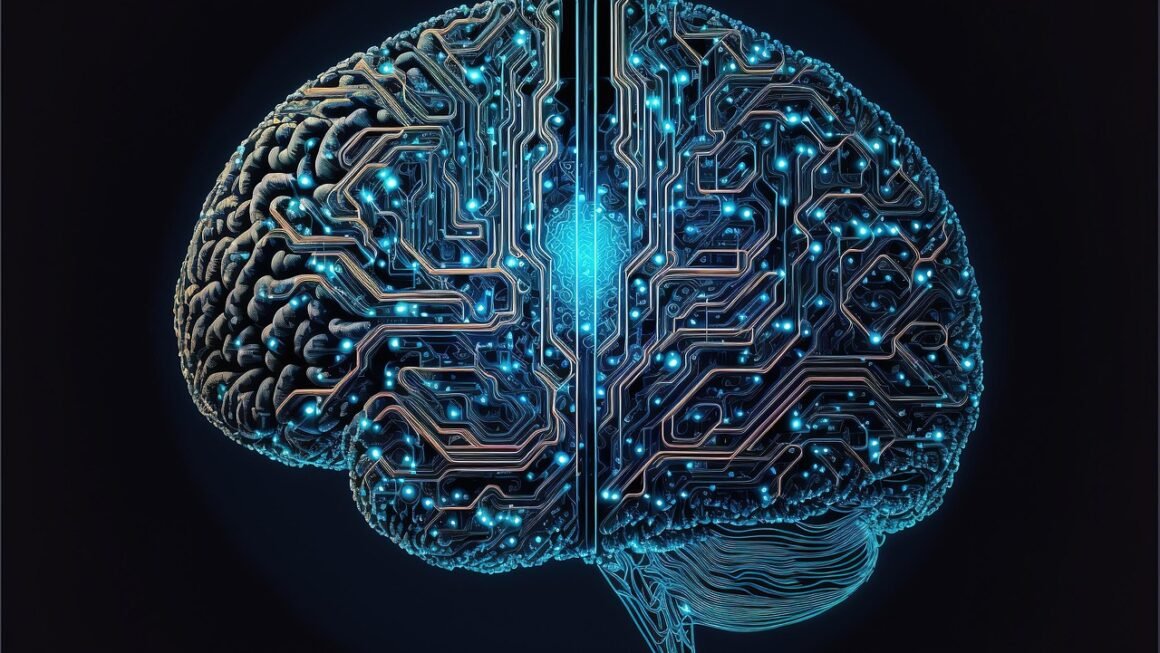
In an era defined by rapid technological advancement, few concepts hold as much transformative power and intrigue as machine intelligence. Far from the stuff of science fiction, machine intelligence is now a tangible, influential force reshaping industries, economies, and our daily lives. It’s the silent engine powering everything from personalized recommendations to life-saving medical diagnoses, constantly learning, adapting, and evolving. This comprehensive guide will demystify machine intelligence, exploring its core components, real-world applications, ethical considerations, and the exciting future it promises.
What is Machine Intelligence? Unpacking the Core Concepts
Machine intelligence refers to the capability of machines to exhibit intelligence-like behaviors, including learning, problem-solving, understanding, and decision-making. It’s a broad field that encompasses various specialized disciplines, all striving to replicate or surpass human cognitive abilities in specific tasks.
Defining Machine Intelligence
At its heart, machine intelligence is about creating systems that can perform tasks that typically require human intelligence. This involves enabling machines to process information, recognize patterns, make predictions, and even generate new content without explicit programming for every single scenario. Instead, these systems learn from data and algorithms, improving their performance over time.
- Learning: The ability to acquire knowledge or skills from experience.
- Reasoning: The ability to apply logical principles to problems.
- Problem-solving: The ability to find solutions to complex issues.
- Perception: The ability to interpret sensory data (e.g., images, sound).
- Language Understanding: The ability to comprehend and generate human language.
Actionable Takeaway: Understanding machine intelligence as a broad umbrella for intelligent machine capabilities helps contextualize its diverse applications across technology and business.
Key Sub-disciplines: AI, ML, and Deep Learning
The terms Artificial Intelligence (AI), Machine Learning (ML), and Deep Learning (DL) are often used interchangeably, but they represent distinct, hierarchical concepts:
- Artificial Intelligence (AI): The overarching concept of creating machines that can think and act like humans. AI is the grand vision, encompassing any technique that enables computers to mimic human intelligence.
- Machine Learning (ML): A subset of AI that focuses on building systems that can learn from data without being explicitly programmed. ML algorithms identify patterns and make predictions based on input data.
- Supervised Learning: Algorithms learn from labeled data (e.g., spam/not spam).
- Unsupervised Learning: Algorithms find patterns in unlabeled data (e.g., clustering customer segments).
- Reinforcement Learning: Algorithms learn by interacting with an environment, receiving rewards or penalties.
- Deep Learning (DL): A specialized subset of Machine Learning that uses neural networks with multiple layers (hence “deep”) to learn complex patterns from vast amounts of data. Inspired by the human brain, deep learning excels at tasks like image recognition, natural language processing, and speech recognition.
Practical Example: Consider an email spam filter. Early AI approaches might have used rigid rule sets. An ML-based filter learns from examples of spam and legitimate emails. A Deep Learning filter can identify subtle, complex patterns in email content and sender behavior, even detecting novel forms of spam more effectively due to its layered neural network architecture.
Actionable Takeaway: Differentiating between AI, ML, and Deep Learning is crucial for accurately discussing and implementing intelligent solutions. Deep Learning, in particular, is driving many of today’s most impressive machine intelligence breakthroughs.
The Driving Forces: How Machine Intelligence Works
At its core, machine intelligence is powered by three fundamental pillars: vast amounts of data, sophisticated algorithms, and immense computational power.
Data: The Fuel of Intelligence
Just as humans learn from experience, machine intelligence systems learn from data. The quantity, quality, and relevance of data directly impact the intelligence and accuracy of an AI model.
- Big Data: The sheer volume, velocity, and variety of data generated today provide an unprecedented training ground for MI algorithms. From user clicks to sensor readings, every digital footprint can be a data point.
- Data Preprocessing: Raw data is often noisy, incomplete, or inconsistent. Cleaning, transforming, and preparing data is a critical step to ensure models learn effectively and avoid biases.
- Data Labeling: For supervised learning, data must be accurately labeled. This labor-intensive process is vital for training models to recognize specific categories or attributes.
Practical Example: A self-driving car’s machine intelligence relies on terabytes of sensor data (camera images, radar, lidar) collected from millions of miles driven. This data trains its deep learning models to recognize pedestrians, traffic signs, and other vehicles, enabling safe navigation.
Actionable Takeaway: Prioritize data strategy, governance, and quality as foundational elements for any successful machine intelligence initiative. Without good data, even the best algorithms will underperform.
Algorithms: The Brains Behind the Operation
Algorithms are the step-by-step instructions that machine intelligence systems follow to process data, identify patterns, and make decisions. They are the “brains” that translate data into actionable insights.
- Regression Algorithms: Used for predicting continuous values (e.g., house prices, stock values).
- Classification Algorithms: Used for categorizing data into discrete classes (e.g., disease diagnosis, sentiment analysis).
- Clustering Algorithms: Used for grouping similar data points without prior labels (e.g., customer segmentation).
- Neural Networks: Multi-layered algorithms inspired by the human brain, forming the basis of deep learning for complex pattern recognition.
Practical Example: In an e-commerce platform, a recommendation engine uses collaborative filtering algorithms (a type of ML algorithm) to analyze your past purchases and browsing history, comparing them with similar users, to suggest products you might like. This algorithm continuously updates as more data becomes available.
Actionable Takeaway: Choosing the right algorithm for a specific problem is crucial. A basic understanding of different algorithm types empowers better decision-making in MI project design.
Computational Power: The Engine Room
Training complex machine intelligence models, especially deep learning networks, requires immense computational resources. This is where advanced hardware and distributed computing come into play.
- GPUs (Graphics Processing Units): Originally designed for rendering computer graphics, GPUs are highly effective at parallel processing, making them ideal for the vector and matrix calculations inherent in neural network training.
- TPUs (Tensor Processing Units): Developed by Google, TPUs are custom-designed ASICs (Application-Specific Integrated Circuits) optimized specifically for machine learning workloads, particularly for TensorFlow frameworks.
- Cloud Computing: Services like AWS, Google Cloud, and Azure provide scalable, on-demand access to powerful computational resources, democratizing access to high-performance computing for MI.
Practical Example: Training a large language model like GPT-3 involved hundreds of billions of parameters and consumed thousands of petaflop/s-days of compute, requiring a massive cluster of GPUs over several weeks. Such feats would be impossible without dedicated, powerful hardware.
Actionable Takeaway: Recognize that scaling machine intelligence often necessitates substantial computational investment. Leveraging cloud platforms can provide flexible and cost-effective access to the necessary processing power.
Real-World Applications: Where Machine Intelligence Shines
Machine intelligence is no longer a futuristic concept; it’s deeply embedded in our present, driving innovation and efficiency across countless domains.
Enhancing Business Operations
Businesses are leveraging machine intelligence to streamline processes, gain competitive advantages, and make more informed decisions.
- Predictive Analytics: Forecasting sales trends, predicting equipment failures, identifying potential customer churn. For instance, manufacturers use MI to predict when machinery needs maintenance, preventing costly downtime.
- Fraud Detection: Financial institutions use MI to analyze transaction patterns in real-time, flagging suspicious activities that indicate fraud with high accuracy.
- Supply Chain Optimization: Optimizing inventory levels, routing logistics, and forecasting demand to reduce costs and improve delivery times.
- Customer Service Automation: AI-powered chatbots and virtual assistants handle routine inquiries, freeing human agents for complex issues, significantly improving response times and customer satisfaction.
Actionable Takeaway: Businesses can start by identifying specific pain points or areas where data is abundant but insights are lacking. MI can turn this data into actionable intelligence for immediate operational improvements.
Transforming Daily Life
From our smartphones to our homes, machine intelligence makes everyday interactions more intuitive and efficient.
- Personalized Recommendations: Streaming services (Netflix, Spotify), e-commerce sites (Amazon), and social media platforms use MI to suggest content, products, or connections tailored to individual preferences.
- Virtual Assistants: Siri, Google Assistant, and Alexa utilize natural language processing (NLP) and machine learning to understand voice commands, answer questions, and control smart home devices.
- Autonomous Vehicles: Self-driving cars rely on computer vision, sensor fusion, and deep learning to perceive their environment, make navigation decisions, and ensure safety.
- Smart Home Devices: Thermostats that learn your preferences, smart security cameras that detect intruders, and intelligent lighting systems are all powered by MI.
Actionable Takeaway: Embrace the convenience and efficiency that MI offers in personal technology, understanding that these tools are continuously learning and improving based on user interaction.
Revolutionizing Industries
Specific sectors are undergoing profound transformations thanks to the capabilities of machine intelligence.
- Healthcare:
- Drug Discovery: Accelerating the identification of potential drug candidates and predicting their efficacy.
- Medical Imaging Analysis: Assisting radiologists in detecting anomalies (e.g., tumors in X-rays, MRIs) with increased speed and accuracy.
- Personalized Medicine: Analyzing patient genomics and health records to tailor treatment plans.
- Finance:
- Algorithmic Trading: MI-driven algorithms execute trades at high speeds, exploiting market inefficiencies.
- Credit Scoring: More sophisticated risk assessment models that go beyond traditional metrics.
- Manufacturing:
- Quality Control: Computer vision systems inspect products on assembly lines for defects, ensuring consistent quality.
- Robotics and Automation: Intelligent robots perform complex tasks in factories, improving precision and safety.
Actionable Takeaway: Industry professionals should actively seek out specific MI solutions that address their sector’s unique challenges, from R&D to operational efficiency. Investing in MI can be a key differentiator.
Benefits and Challenges: A Balanced Perspective
While the potential of machine intelligence is immense, it’s crucial to approach its development and deployment with a balanced view, acknowledging both its incredible advantages and the significant challenges it presents.
The Upsides: Efficiency, Innovation, and Growth
The benefits of adopting machine intelligence are far-reaching, impacting virtually every aspect of business and society.
- Increased Efficiency and Automation: MI automates repetitive, time-consuming tasks, freeing human employees to focus on more creative and strategic work. This leads to significant operational cost savings.
- Enhanced Accuracy and Decision-Making: MI systems can process and analyze vast datasets much faster and with greater precision than humans, leading to more data-driven decisions and fewer errors. A recent study by IBM found that companies leveraging AI for decision-making saw a 32% increase in productivity.
- New Products and Services: MI is a catalyst for innovation, enabling the creation of entirely new functionalities, products, and business models that were previously impossible.
- Personalization and Improved User Experience: Tailoring experiences to individual users drives higher engagement and satisfaction across various platforms and services.
- Solving Complex Global Problems: MI is being applied to grand challenges like climate change prediction, disease outbreaks, and resource management.
Actionable Takeaway: Focus on identifying areas where MI can significantly improve efficiency, accuracy, or customer experience. Quantify these benefits to build a strong case for investment.
Navigating the Hurdles: Ethical, Technical, and Societal Concerns
Alongside its benefits, machine intelligence introduces complex challenges that demand careful consideration and proactive solutions.
- Data Privacy and Security: MI relies on data, raising concerns about how personal and sensitive information is collected, stored, and used. Robust security measures and strict data governance are paramount.
- Algorithmic Bias: If training data reflects existing societal biases (e.g., gender, race), MI models can inadvertently perpetuate or amplify these biases, leading to unfair or discriminatory outcomes. This is a critical area of active research and development in ethical AI.
- Job Displacement: Automation by MI may lead to job losses in certain sectors, necessitating workforce retraining and adaptation strategies.
- Explainability (XAI): Many advanced MI models, especially deep learning networks, operate as “black boxes,” making it difficult to understand how they arrive at their decisions. This lack of transparency can be problematic in critical applications like healthcare or legal judgments.
- Ethical Dilemmas: As MI systems become more autonomous, questions arise about accountability for their actions, particularly in high-stakes scenarios (e.g., autonomous vehicles in accidents).
- Regulatory Challenges: Governments worldwide are grappling with how to regulate MI effectively without stifling innovation, addressing issues like data ownership, fairness, and safety.
Actionable Takeaway: Implement ethical AI principles from the outset, including diverse data sourcing, bias detection, and transparency efforts. Engage in ongoing dialogue about the societal impact of MI and advocate for responsible development.
The Future of Machine Intelligence: Trends and Outlook
The field of machine intelligence is dynamic, with continuous advancements pushing the boundaries of what’s possible. The future promises even more profound integration into our lives and work.
Emerging Technologies and Synergies
Several exciting trends are shaping the next generation of machine intelligence.
- Edge AI: Bringing MI processing capabilities closer to the data source (e.g., on devices like smartphones or IoT sensors) reduces latency, enhances privacy, and lowers bandwidth requirements.
- AI and IoT Integration: The Internet of Things (IoT) generates massive amounts of data, providing rich input for MI, while MI makes IoT devices smarter and more autonomous.
- AI-as-a-Service (AIaaS): Making sophisticated MI capabilities accessible via cloud APIs, democratizing access for businesses without extensive in-house expertise.
- Generative AI: Models capable of creating new, realistic content such as images, text, and music (e.g., DALL-E, ChatGPT), demonstrating remarkable creative potential.
- Human-AI Collaboration: The focus is increasingly shifting from full automation to augmenting human capabilities, creating synergistic relationships where humans and AI work together more effectively.
Actionable Takeaway: Stay informed about these emerging trends and consider how integrating technologies like Edge AI or Generative AI could open new avenues for innovation in your field.
Ethical AI and Regulation
As MI becomes more powerful, the imperative for ethical guidelines and robust regulation grows stronger. The conversation is shifting from “can we?” to “should we?” and “how can we do it responsibly?”
- Bias Mitigation: Continued research into techniques for identifying and reducing bias in datasets and algorithms.
- Explainable AI (XAI): Developing methods to make MI decisions more understandable and transparent to human users.
- Fairness and Accountability: Establishing frameworks to ensure MI systems treat individuals fairly and to assign accountability when things go wrong.
- Global Regulatory Efforts: Organizations like the EU are pioneering comprehensive AI legislation (e.g., the AI Act) to set standards for safety, transparency, and human oversight.
Actionable Takeaway: Actively participate in discussions around ethical AI and contribute to the development of responsible AI practices within your organization or industry. Adhering to ethical principles is not just compliance but a foundation for trust and long-term success.
The Pervasive Intelligent Landscape
Looking ahead, machine intelligence will become even more ubiquitous and seamlessly integrated into the fabric of our lives. We can expect:
- Hyper-Personalization: Even more refined and anticipatory experiences across all digital and physical touchpoints.
- Intelligent Automation: Complex workflows across entire organizations becoming autonomously managed by MI systems.
- Breakthroughs in Science and Medicine: MI accelerating discoveries in materials science, biology, and personalized health.
- Addressing Grand Challenges: MI will be a crucial tool in tackling climate change, global health crises, and sustainable development goals.
Actionable Takeaway: Prepare for a future where intelligent systems are not just tools but active partners in innovation. Investing in continuous learning and adapting to MI advancements will be key to thriving.
Conclusion
Machine intelligence is more than just a technological buzzword; it’s a fundamental shift in how we interact with technology, solve problems, and unlock new possibilities. From its foundational concepts in AI, Machine Learning, and Deep Learning, powered by data and computational might, to its transformative impact on industries and daily life, MI is undeniably shaping our present and future.
While the journey comes with its share of challenges—from ethical considerations like bias and privacy to the critical need for explainability—the potential benefits of MI in driving efficiency, fostering innovation, and addressing some of humanity’s most pressing issues are immense. As we continue to advance, a thoughtful, ethical, and collaborative approach to developing and deploying machine intelligence will be paramount. By understanding its intricacies and actively engaging with its evolution, we can harness the true power of machine intelligence to build a smarter, more efficient, and more equitable future for all.