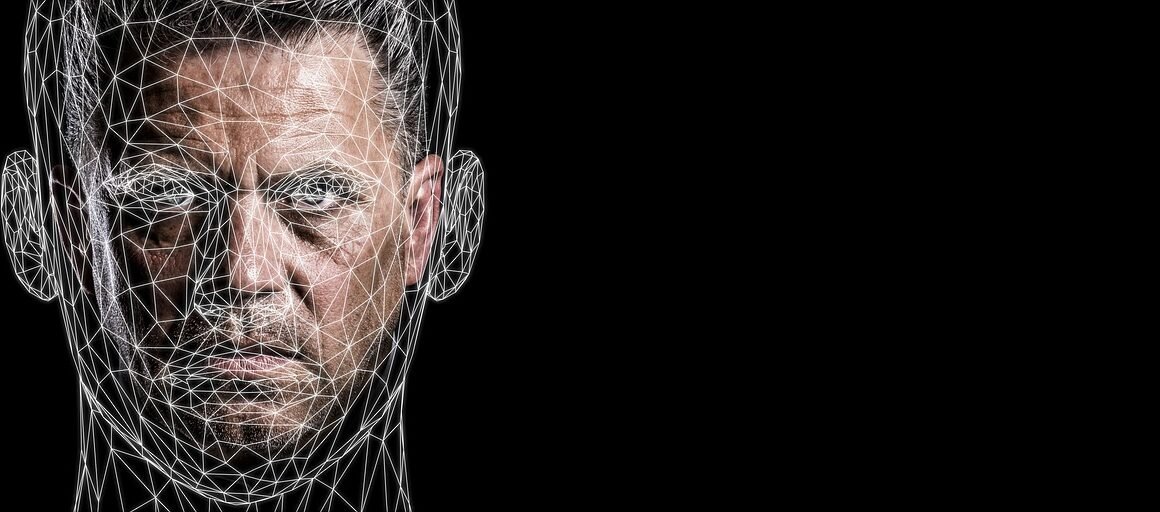
In a world increasingly driven by data and automation, few technologies have captured the imagination and delivered transformative results quite like neural networks. These powerful computational models, inspired by the intricate workings of the human brain, lie at the heart of today’s most advanced artificial intelligence systems. From recognizing faces on your smartphone to powering medical diagnoses and even driving autonomous vehicles, neural networks are not just a futuristic concept – they are actively reshaping industries and our daily lives. Understanding their core principles is key to grasping the future of AI.
What Are Neural Networks? The Brains Behind AI
At its core, a neural network is a sophisticated system designed to recognize patterns, make decisions, and learn from data in a way that mimics biological neurons. It’s a fundamental building block of deep learning, a subfield of machine learning that utilizes multi-layered neural networks to achieve state-of-the-art results in complex tasks.
Mimicking the Human Brain
- Biological Inspiration: Just as our brains process information through a vast network of interconnected neurons, artificial neural networks consist of interconnected “nodes” or “perceptrons.”
- Learning from Experience: Both biological and artificial neural networks improve their performance over time by learning from experience and adjusting the strength of their connections.
Core Components of a Neural Network
Every neural network, regardless of its complexity, is built upon a few fundamental components:
- Neurons (Nodes): The basic processing units that receive input, process it, and transmit output to other neurons.
- Layers: Neurons are organized into layers:
- Input Layer: Receives the raw data.
- Hidden Layers: Perform computations and transformations on the input data. Most deep learning networks have multiple hidden layers.
- Output Layer: Produces the final result of the network’s processing.
- Connections (Synapses): Links between neurons, each with an associated “weight” that determines the strength and influence of one neuron’s output on another’s input.
- Weights and Biases: Numerical values that are adjusted during training to help the network learn patterns in the data.
How They Learn
Neural networks learn by being exposed to vast amounts of data. This process involves:
- Training: Adjusting the weights and biases based on the discrepancies between the network’s predictions and the actual outcomes.
- Pattern Recognition: Through iterative adjustments, the network learns to identify intricate patterns and relationships within the data.
Actionable Takeaway: Grasping the concept of interconnected nodes and layers is the first step to understanding how these powerful models process information and learn.
The Anatomy of a Neural Network
To truly appreciate the capabilities of neural networks, it’s essential to delve deeper into their internal workings. Each component plays a vital role in the network’s ability to learn and make predictions.
Layers Explained
- Input Layer: This is where your data enters the network. For example, if you’re classifying images, each pixel’s intensity might be an input. If predicting house prices, features like square footage, number of bedrooms, and location would be inputs.
- Hidden Layers: These layers are the computational engines. They perform complex mathematical transformations on the input data, extracting increasingly abstract features. The more hidden layers a network has, the “deeper” it is, enabling it to learn more intricate patterns.
- Output Layer: This layer produces the final prediction or classification. The number of neurons here depends on the task: one neuron for binary classification (e.g., spam or not spam), multiple for multi-class classification (e.g., cat, dog, bird), or regression (e.g., a specific price).
Neurons and Activation Functions
Each neuron in a hidden or output layer performs two main operations:
- Weighted Sum: It calculates a weighted sum of its inputs, adds a bias term, essentially combining all signals received.
- Activation Function: This sum is then passed through an activation function, which introduces non-linearity into the network. Without non-linearity, a neural network would only be able to learn linear relationships, severely limiting its power.
Common Activation Functions:
- ReLU (Rectified Linear Unit):
f(x) = max(0, x). Widely popular for its computational efficiency and effectiveness in deep networks. - Sigmoid:
f(x) = 1 / (1 + e^-x). Squashes values between 0 and 1, often used in the output layer for binary classification. - Tanh (Hyperbolic Tangent):
f(x) = (e^x - e^-x) / (e^x + e^-x). Similar to Sigmoid but outputs values between -1 and 1.
Weights and Biases: The Network’s Memory
- Weights: These are the parameters that determine the strength of the connection between neurons. A higher weight means a stronger influence. During training, the network adjusts these weights to minimize errors.
- Biases: A bias term is added to the weighted sum of inputs before the activation function. It allows the activation function to shift to the left or right, making the model more flexible and able to fit the data better.
Actionable Takeaway: The choice of activation function and the effective tuning of weights and biases are critical factors determining a neural network’s ability to learn complex, non-linear relationships in data.
Training Neural Networks: The Learning Process
The true magic of neural networks lies in their ability to learn autonomously from data. This learning process is iterative and involves several sophisticated steps.
Data is King: The Foundation of Learning
No matter how sophisticated a neural network is, its performance is fundamentally limited by the quality and quantity of the training data it receives. High-quality, diverse, and representative datasets are crucial.
- Supervised Learning: Most common approach, where the network learns from labeled data (input-output pairs). Example: showing images of cats and explicitly telling the network, “This is a cat.”
- Unsupervised Learning: The network learns patterns from unlabeled data, finding structures or clusters on its own. Example: grouping similar customer behaviors without prior definitions.
- Reinforcement Learning: The network learns by interacting with an environment, receiving rewards or penalties for its actions. Example: training an AI to play chess.
Loss Functions: Measuring Error
After a neural network makes a prediction, a loss function (or cost function) quantifies how “wrong” that prediction was compared to the actual target value. The goal of training is to minimize this loss.
- Mean Squared Error (MSE): Commonly used for regression tasks, it calculates the average of the squared differences between predicted and actual values.
- Cross-Entropy Loss: Predominantly used for classification tasks, it measures the performance of a classification model whose output is a probability value between 0 and 1.
Backpropagation: The Core Learning Algorithm
Backpropagation is the fundamental algorithm that enables neural networks to learn. It’s a sophisticated method for efficiently calculating the gradient of the loss function with respect to each weight and bias in the network.
- Forward Pass: Input data flows through the network, layer by layer, until an output prediction is generated.
- Calculate Loss: The loss function compares the prediction to the actual target.
- Backward Pass (Backpropagation): The error is then “propagated” backward through the network, from the output layer to the input layer. During this process, the algorithm determines how much each weight and bias contributed to the error.
- Weight Adjustment: Using an optimizer, the weights and biases are updated in a direction that reduces the error.
This cycle of forward pass, loss calculation, backward pass, and weight adjustment repeats thousands or millions of times until the network’s predictions are accurate enough, or the loss function converges to a minimum.
Optimizers: Fine-Tuning the Learning
Optimizers are algorithms or functions that adjust the parameters of the neural network (weights and biases) during training to minimize the loss function. They dictate “how” the network learns.
- Gradient Descent: The most basic optimizer, it iteratively moves towards the minimum of the loss function by taking steps proportional to the negative of the gradient.
- Stochastic Gradient Descent (SGD): A variant of Gradient Descent that uses a single training example or a small batch of examples to compute the gradient, making it faster and suitable for large datasets.
- Adam (Adaptive Moment Estimation): A widely popular and effective optimizer that combines aspects of other advanced optimizers, often achieving faster convergence and better performance.
Actionable Takeaway: Training a neural network is an iterative optimization process, where data quality, appropriate loss functions, and efficient optimizers are paramount for building robust and accurate AI models.
Types of Neural Networks and Their Applications
While the fundamental principles remain consistent, different architectures of neural networks have evolved to excel at specific types of tasks. Choosing the right network type is crucial for effective problem-solving.
Feedforward Neural Networks (FNNs)
- Structure: The simplest type, where information flows in only one direction, from input to output, without loops.
- Applications: Ideal for tabular data, basic classification tasks, and regression problems. Examples include predicting customer churn, credit scoring, or simple forecasting.
Convolutional Neural Networks (CNNs)
- Specialty: Designed primarily for processing grid-like data, such as images. They automatically learn spatial hierarchies of features.
- Key Components:
- Convolutional Layers: Apply filters to detect features like edges, textures, or shapes.
- Pooling Layers: Reduce the dimensionality of the feature maps, making the model more robust to variations.
- Applications:
- Image Recognition: Facial recognition, object detection (e.g., self-driving cars identifying pedestrians).
- Medical Imaging: Detecting diseases like cancer from X-rays or MRIs.
- Video Analysis: Action recognition, surveillance.
Example: A CNN can be trained on millions of images of cats and dogs. By learning various features (ears, whiskers, fur patterns), it can accurately classify new, unseen images with high precision, often exceeding human capability in specific tasks.
Recurrent Neural Networks (RNNs)
- Specialty: Built to handle sequential data, where the order of information matters. They have internal memory, allowing them to retain information from previous inputs.
- Challenges: Vanilla RNNs often struggle with “long-term dependencies” (forgetting information from the distant past).
- Advanced Variants:
- Long Short-Term Memory (LSTM): Overcome the long-term dependency problem with “gates” that control the flow of information.
- Gated Recurrent Unit (GRU): A slightly simplified version of LSTM with similar performance.
- Applications:
- Natural Language Processing (NLP): Machine translation, sentiment analysis, chatbots, text generation.
- Speech Recognition: Converting spoken words into text.
- Time Series Prediction: Stock market forecasting, weather prediction.
Example: Google Translate uses advanced RNNs (specifically Transformer architectures, which build on RNN principles) to understand the context of sentences and translate them accurately across languages.
Generative Adversarial Networks (GANs)
- Specialty: A class of generative AI models capable of generating new data instances that resemble the training data. They consist of two competing neural networks:
- Generator: Creates new data (e.g., images).
- Discriminator: Tries to distinguish between real data and data generated by the generator.
- Applications:
- Image Generation: Creating realistic human faces, art, or modifying existing images.
- Data Augmentation: Generating synthetic data to expand small datasets.
- Drug Discovery: Generating novel molecular structures.
Actionable Takeaway: Matching the right neural network architecture to your problem type is crucial for optimal performance and efficiency. For image data, think CNNs; for sequential data, consider RNNs/LSTMs; for generating novel content, explore GANs.
The Impact and Future of Neural Networks
Neural networks have already profoundly impacted numerous sectors, and their evolution continues at an astonishing pace, promising even more revolutionary changes.
Transforming Industries
- Healthcare: Early disease detection (e.g., classifying cancerous cells from biopsies with 90%+ accuracy in some cases), personalized medicine, drug discovery, and medical imaging analysis.
- Finance: Fraud detection (reducing losses by billions annually), algorithmic trading, credit risk assessment, and personalized financial advice.
- Retail: Personalized recommendations (boosting sales by 10-30% for many e-commerce giants), inventory management, demand forecasting, and customer service chatbots.
- Automotive: Powering autonomous vehicles through real-time object detection, navigation, and decision-making.
- Entertainment: Content recommendation engines (e.g., Netflix, Spotify), generating realistic special effects, and even composing music.
Ethical Considerations and Challenges
As neural networks become more powerful and integrated into society, important ethical and practical challenges arise:
- Bias: Neural networks can perpetuate and even amplify biases present in their training data, leading to unfair or discriminatory outcomes in areas like facial recognition or loan applications.
- Transparency (Black Box Problem): Understanding why a deep neural network makes a particular decision can be challenging, making it difficult to debug errors or build trust in critical applications.
- Job Displacement: Automation driven by AI and neural networks raises concerns about the future of work and the need for retraining.
- Security: Adversarial attacks can trick neural networks into making incorrect classifications by introducing subtle, imperceptible perturbations to input data.
Emerging Trends and Future Directions
- Explainable AI (XAI): Developing techniques to make AI decisions more transparent and understandable to humans, addressing the “black box” problem.
- Neuromorphic Computing: Designing hardware specifically engineered to mimic the structure and function of the human brain, offering greater energy efficiency and processing power for AI.
- Quantum Neural Networks: Exploring the integration of quantum computing principles with neural networks to potentially solve currently intractable problems.
- Neuro-Symbolic AI: Combining the pattern recognition strengths of neural networks with the logical reasoning capabilities of symbolic AI for more robust and trustworthy systems.
- Federated Learning: Training AI models on decentralized datasets across multiple devices without centralizing data, enhancing privacy and security.
Actionable Takeaway: While the potential of neural networks is immense, responsible development requires addressing ethical challenges like bias and transparency. Staying informed about emerging trends is crucial for leveraging the next wave of AI innovation.
Conclusion
Neural networks stand as a testament to humanity’s ingenuity, creating machines that can learn, adapt, and reason in ways previously confined to science fiction. From their humble beginnings mimicking a single neuron to powering complex deep learning architectures, they have catalyzed the current AI revolution. We’ve explored their fundamental components, the intricate learning process of backpropagation, and the diverse types tailored for specific challenges in image, text, and sequential data.
Their impact is already palpable across virtually every industry, enhancing efficiency, driving innovation, and solving problems that were once insurmountable. As we look to the future, the evolution of neural networks promises even more profound transformations, albeit with a growing emphasis on ethical considerations and the pursuit of more transparent, fair, and robust AI systems. Embracing and understanding neural networks is no longer just for data scientists; it’s becoming an essential literacy for navigating our increasingly intelligent world.