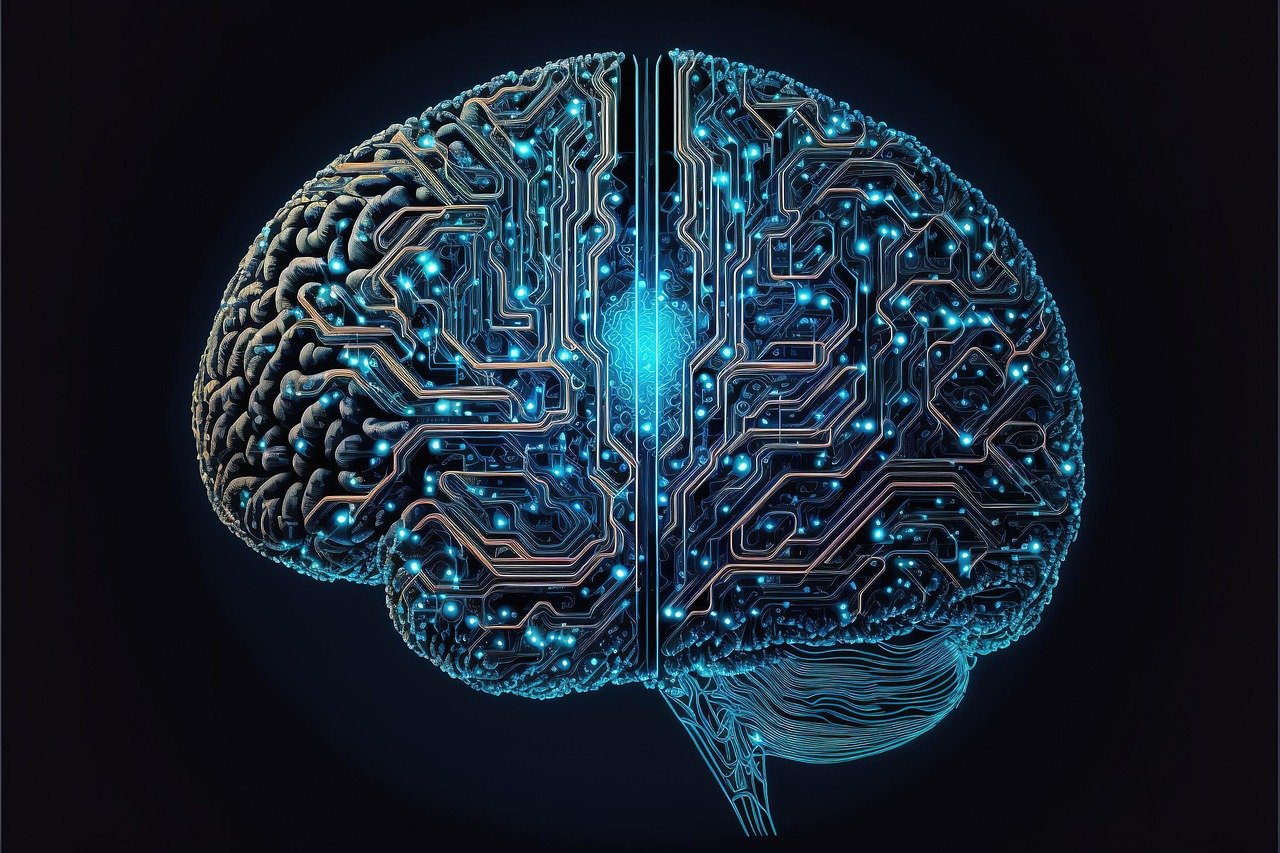
In an era driven by data, where every click, purchase, and interaction generates an astronomical volume of information, a revolutionary technology stands at the forefront of innovation: Machine Learning. It’s the silent engine powering many of the digital experiences we now take for granted, from personalized recommendations on streaming platforms to advanced medical diagnoses. Far from being a futuristic concept, machine learning is a tangible force reshaping industries, driving unprecedented efficiencies, and unlocking insights previously unimaginable. But what exactly is this powerful technology, and how is it transforming our world?
What Exactly is Machine Learning?
At its core, Machine Learning (ML) is a subset of Artificial Intelligence (AI) that enables systems to learn from data, identify patterns, and make decisions with minimal human intervention. Unlike traditional programming, where every rule and instruction is explicitly coded, ML algorithms learn from examples and improve their performance over time.
Defining the Core Concept
Imagine teaching a child to recognize a cat. You show them various pictures of cats (and other animals), and over time, they learn the defining features of a cat without you explicitly listing rules like “has whiskers, four legs, and a tail.” Machine learning operates on a similar principle:
- Learning from Data: ML models are fed vast amounts of data.
- Pattern Recognition: They analyze this data to find correlations, trends, and patterns.
- Prediction/Decision Making: Based on the learned patterns, they can then make predictions or take actions on new, unseen data.
How Does it Work? The Fundamental Process
The journey of a machine learning model, from raw data to actionable intelligence, typically involves several key stages:
- Data Collection & Preparation: Gathering relevant data, cleaning it, handling missing values, and transforming it into a format suitable for the algorithm. This is often the most time-consuming step.
- Feature Engineering: Selecting and transforming raw data variables into features that are most representative of the underlying problem and help improve model performance.
- Algorithm Selection: Choosing the right machine learning algorithm (e.g., regression, classification, clustering) based on the problem type and data characteristics.
- Model Training: The algorithm is fed the prepared data, learns from it, and adjusts its internal parameters to minimize errors or optimize predictions.
- Model Evaluation: The trained model’s performance is tested on a separate dataset (unseen during training) to ensure its accuracy and generalization capabilities.
- Deployment & Monitoring: Once validated, the model is integrated into an application or system, continuously monitored, and retrained as new data becomes available or performance degrades.
Actionable Takeaway: Understanding the iterative nature of ML development—from data to deployment—is crucial. The quality of your data directly impacts the performance of your machine learning model.
The Three Pillars of Machine Learning
Machine learning broadly categorizes its learning approaches into three main paradigms, each suited for different types of problems and data structures.
1. Supervised Learning
Supervised learning is the most common type, where the algorithm learns from labeled data. This means the input data comes with corresponding output labels, acting as a “supervisor” to guide the learning process.
- How it works: The model is trained on a dataset where both the input features and the correct output (label) are known. It learns to map inputs to outputs.
- Common Tasks:
- Classification: Predicting a categorical output (e.g., spam or not spam, disease or no disease, cat or dog).
- Regression: Predicting a continuous numerical output (e.g., house prices, stock values, temperature).
- Practical Examples:
- Email Spam Detection: Training a model with emails labeled “spam” or “not spam” to identify new spam emails.
- Housing Price Prediction: Using historical data (size, location, number of rooms) with their corresponding prices to predict the price of a new house.
- Key Algorithms: Linear Regression, Logistic Regression, Support Vector Machines (SVMs), Decision Trees, Random Forests, K-Nearest Neighbors (KNN).
2. Unsupervised Learning
In contrast to supervised learning, unsupervised learning deals with unlabeled data. The algorithm’s goal is to discover hidden patterns, structures, or relationships within the data on its own.
- How it works: The model explores the input data to find inherent groupings or patterns without any prior knowledge of what those patterns might be.
- Common Tasks:
- Clustering: Grouping similar data points together (e.g., customer segmentation).
- Dimensionality Reduction: Reducing the number of features while retaining important information (e.g., for visualization or simplifying models).
- Association Rule Mining: Discovering relationships between variables in large datasets (e.g., “customers who buy X also buy Y”).
- Practical Examples:
- Customer Segmentation: Grouping customers based on purchasing behavior without predefined categories to tailor marketing strategies.
- Anomaly Detection: Identifying unusual patterns in network traffic that might indicate a cyber-attack.
- Key Algorithms: K-Means Clustering, Principal Component Analysis (PCA), Hierarchical Clustering, DBSCAN.
3. Reinforcement Learning
Reinforcement learning (RL) is inspired by behavioral psychology, where an “agent” learns to make decisions by performing actions in an environment to maximize a cumulative reward.
- How it works: An agent interacts with an environment, takes actions, and receives feedback in the form of rewards or penalties. Through trial and error, it learns the optimal policy (a sequence of actions) to achieve its goal.
- Key Components:
- Agent: The learning entity.
- Environment: The world the agent interacts with.
- State: The current situation of the agent and environment.
- Action: What the agent can do in a given state.
- Reward: Feedback from the environment indicating the goodness of an action.
- Practical Examples:
- Autonomous Driving: A self-driving car learns to navigate traffic, avoiding obstacles, and reaching destinations by receiving rewards for safe driving and penalties for collisions.
- Game Playing: AI agents learning to play complex games like Chess or Go, often surpassing human capabilities.
- Robotics: Robots learning to perform complex manipulation tasks by interacting with their physical environment.
- Key Algorithms: Q-Learning, SARSA, Deep Q Networks (DQNs), Policy Gradients.
Actionable Takeaway: The choice of learning paradigm is paramount; supervised learning requires labeled data for prediction, unsupervised learning excels at pattern discovery in unlabeled data, and reinforcement learning enables agents to learn optimal behaviors through interaction.
Key Algorithms and Their Applications
Within the three pillars, a diverse array of algorithms forms the backbone of machine learning. Understanding a few fundamental types can provide significant insight into their capabilities.
Regression Algorithms
Regression algorithms are primarily used in supervised learning to predict continuous numerical values.
- Purpose: To model the relationship between a dependent variable and one or more independent variables.
- Examples:
- Linear Regression: Models a linear relationship between input features and the output. Simple yet powerful.
- Polynomial Regression: Models non-linear relationships by fitting a polynomial equation.
- Applications:
- Sales Forecasting: Predicting future sales based on historical data, marketing spend, and economic indicators.
- Stock Market Prediction: Estimating future stock prices, though inherently challenging due to market volatility.
- Demand Forecasting: Predicting future demand for products to optimize inventory.
Classification Algorithms
Classification algorithms, also part of supervised learning, are used to predict categorical outcomes or assign data points to predefined classes.
- Purpose: To categorize data into one of several distinct classes.
- Examples:
- Logistic Regression: Despite its name, it’s a classification algorithm used for binary classification problems.
- Decision Trees & Random Forests: Tree-like models that make decisions based on a series of if-then rules. Random Forests combine multiple decision trees for improved accuracy.
- Support Vector Machines (SVMs): Finds an optimal hyperplane to separate data points into different classes.
- K-Nearest Neighbors (KNN): Classifies a data point based on the majority class of its ‘K’ closest neighbors.
- Applications:
- Medical Diagnosis: Classifying whether a patient has a specific disease based on symptoms and test results.
- Email Spam Filtering: Identifying emails as “spam” or “not spam.”
- Customer Churn Prediction: Predicting which customers are likely to cancel a subscription or service.
Clustering Algorithms
Clustering algorithms fall under unsupervised learning and are used to group similar data points together without prior labels.
- Purpose: To discover inherent groupings or structures within a dataset.
- Examples:
- K-Means Clustering: Partitions data into ‘K’ clusters, where each data point belongs to the cluster with the nearest mean.
- DBSCAN (Density-Based Spatial Clustering of Applications with Noise): Groups together points that are closely packed together, marking as outliers points that lie alone in low-density regions.
- Applications:
- Market Segmentation: Grouping customers with similar purchasing habits for targeted marketing.
- Document Analysis: Categorizing news articles or research papers by topic.
- Image Segmentation: Dividing an image into multiple segments or objects.
Deep Learning – A Powerful Subset
Deep Learning is a specialized field within machine learning that utilizes artificial neural networks with multiple layers (hence “deep”). Inspired by the structure and function of the human brain, deep learning models can learn complex patterns from vast amounts of data, especially unstructured data like images, audio, and text.
- How it works: Deep neural networks consist of an input layer, multiple hidden layers, and an output layer. Each layer learns to recognize different aspects of the data, building up a hierarchical understanding.
- Architectures:
- Convolutional Neural Networks (CNNs): Highly effective for image and video processing.
- Recurrent Neural Networks (RNNs): Suited for sequential data like time series and natural language.
- Transformers: A newer architecture that has revolutionized Natural Language Processing (NLP) tasks.
- Applications:
- Image Recognition: Identifying objects, faces, and scenes in images.
- Natural Language Processing (NLP): Machine translation, sentiment analysis, chatbots, and text generation.
- Speech Recognition: Converting spoken language into text (e.g., virtual assistants like Siri or Alexa).
Actionable Takeaway: Selecting the right algorithm is often the most critical step in an ML project. It requires understanding the problem, the data’s nature, and the strengths and weaknesses of different algorithms. Start with simpler models and gradually move to more complex ones like deep learning if necessary.
The Impact of Machine Learning Across Industries
Machine learning is not confined to tech giants; its transformative power is being harnessed across virtually every sector, fundamentally changing how businesses operate and innovate.
Healthcare
ML is revolutionizing healthcare by improving diagnostics, personalizing treatments, and accelerating drug discovery.
- Drug Discovery: Accelerating the identification of potential drug candidates and predicting their efficacy.
- Personalized Medicine: Tailoring treatment plans based on a patient’s genetic makeup, lifestyle, and medical history.
- Disease Diagnosis: AI-powered systems can analyze medical images (X-rays, MRIs, CT scans) to detect early signs of diseases like cancer or retinopathy with high accuracy, often assisting human radiologists.
- Predictive Analytics for Outbreaks: Forecasting the spread of infectious diseases.
Finance
The financial sector leverages ML for enhanced security, risk management, and personalized customer services.
- Fraud Detection: ML models analyze transaction patterns in real-time to identify and flag suspicious activities, significantly reducing financial fraud.
- Algorithmic Trading: Using ML to analyze market trends and execute trades at optimal times.
- Credit Scoring & Risk Assessment: Developing more accurate creditworthiness models, leading to fairer lending practices and better risk management.
- Customer Service: Chatbots and virtual assistants for instant customer support.
Retail & E-commerce
ML is at the heart of personalized shopping experiences and optimized operations in retail.
- Recommendation Engines: Platforms like Amazon and Netflix use ML to suggest products or content based on past behavior and preferences, driving sales and engagement.
- Personalized Marketing: Delivering targeted advertisements and promotions to individual customers.
- Inventory Optimization: Predicting demand for products to prevent stockouts or overstocking.
- Dynamic Pricing: Adjusting product prices in real-time based on demand, competition, and inventory levels.
Manufacturing & Logistics
In manufacturing and supply chain, ML drives efficiency, reduces costs, and improves quality control.
- Predictive Maintenance: ML algorithms analyze sensor data from machinery to predict when equipment might fail, allowing for proactive maintenance and minimizing downtime.
- Quality Control: AI-powered computer vision systems inspect products on assembly lines for defects more quickly and accurately than human eyes.
- Supply Chain Optimization: Predicting demand fluctuations, optimizing routes, and managing inventory across complex global supply chains.
- Robotics & Automation: Empowering robots with advanced learning capabilities for complex tasks.
Actionable Takeaway: Machine learning is not just a technological trend; it’s a fundamental shift empowering innovation and efficiency across every sector. Businesses that embrace ML gain a significant competitive edge.
Getting Started with Machine Learning: A Practical Roadmap
The field of machine learning can seem daunting, but with a structured approach, anyone can begin their journey into this exciting domain.
Foundation Skills
Before diving into complex algorithms, a solid foundation is essential:
- Mathematics: A grasp of linear algebra, calculus, and especially statistics and probability is crucial for understanding how algorithms work.
- Programming: Python is the industry standard for ML due to its extensive libraries. R is another popular choice, especially in academia and statistics.
- Data Manipulation: Familiarity with Python libraries like Pandas for data cleaning and manipulation, and NumPy for numerical operations.
Learning Resources
The accessibility of ML education has never been greater:
- Online Courses: Platforms like Coursera, edX, Udacity, and DataCamp offer comprehensive courses from beginner to advanced levels, often taught by university professors and industry experts.
- Books: Classics like “Hands-On Machine Learning with Scikit-Learn, Keras, and TensorFlow” by Aurélien Géron are excellent practical guides.
- Open-Source Projects & Blogs: Explore GitHub for ML projects and follow leading data science blogs for insights and tutorials.
- Kaggle: Participate in data science competitions to apply your skills to real-world problems and learn from top practitioners.
Tools and Libraries
Leveraging the right tools can accelerate your learning and development:
- Python Libraries:
- Scikit-learn: A user-friendly library offering a wide range of ML algorithms.
- TensorFlow & Keras: Powerful libraries for deep learning, especially for neural networks.
- PyTorch: Another popular deep learning framework, often favored for its flexibility and research-friendliness.
- Cloud Platforms:
- AWS Sagemaker: Amazon’s fully managed service for building, training, and deploying ML models.
- Google Cloud AI Platform: Google’s suite of ML products and services.
- Azure Machine Learning: Microsoft’s cloud-based platform for end-to-end ML.
Build Your Portfolio
Practical experience is invaluable. Apply what you learn by:
- Working on Small Projects: Start with simple datasets and tasks (e.g., predicting house prices, classifying flowers).
- Contributing to Open Source: Find ML projects on GitHub and contribute, even in a small way.
- Documenting Your Work: Create a portfolio of your projects on GitHub or a personal blog, explaining your approach and results.
Actionable Takeaway: The best way to learn machine learning is by doing. Start with foundational skills, choose practical projects, and leverage the wealth of online resources and tools available. Continuous learning and experimentation are key.
Conclusion
Machine learning is not merely a technological advancement; it’s a paradigm shift that is fundamentally altering how we interact with technology, analyze data, and solve complex problems. From empowering smart devices and revolutionizing industries like healthcare and finance to driving groundbreaking research in AI, its influence is pervasive and ever-expanding. As we navigate an increasingly data-rich world, understanding the principles and applications of machine learning becomes not just an advantage, but a necessity.
The journey into machine learning is one of continuous discovery, demanding curiosity, analytical thinking, and a passion for turning data into insight. Whether you’re a business leader looking to harness its power or an aspiring data scientist eager to build the next generation of intelligent systems, the world of machine learning offers boundless opportunities. Embrace the learning, experiment with the algorithms, and prepare to be part of the most exciting technological revolution of our time.