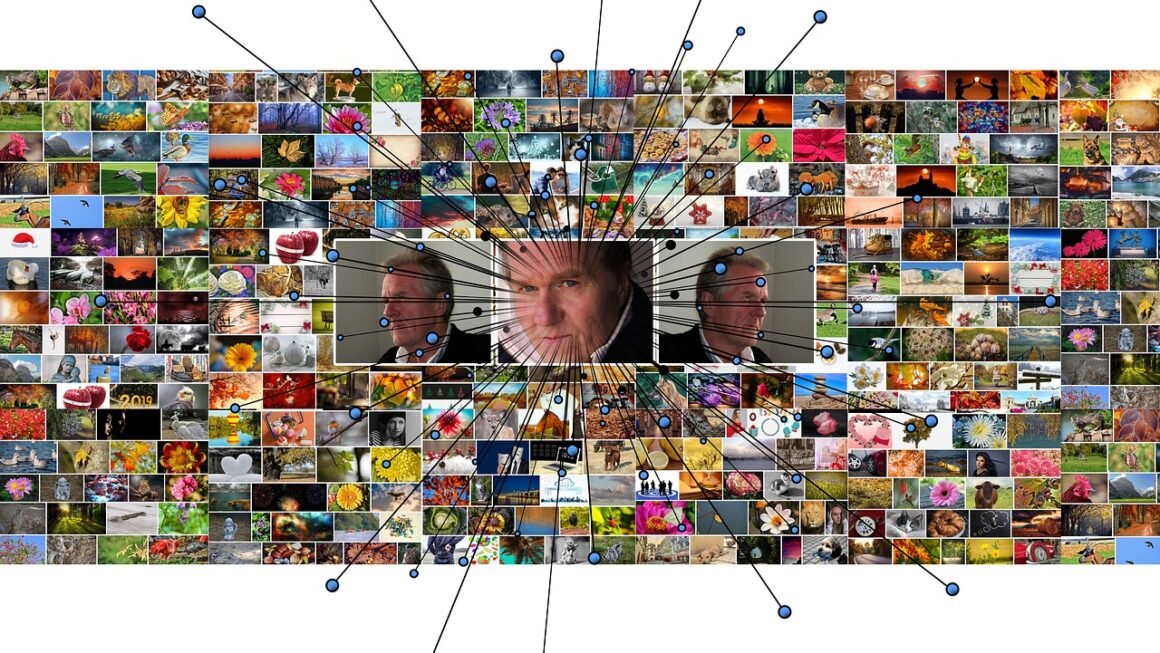
As artificial intelligence rapidly integrates into every facet of our lives, from healthcare and finance to criminal justice and entertainment, its transformative potential is undeniable. AI promises efficiency, innovation, and unprecedented insights. However, beneath the surface of this technological marvel lies a critical challenge: the inherent risk of bias. AI systems, designed and trained by humans and human-generated data, are not immune to the societal prejudices and historical inequities that plague our world. Understanding, detecting, and mitigating this “AI bias” is not just a technical hurdle but an ethical imperative to ensure AI truly serves humanity fairly and equitably.
What is AI Bias? Unpacking the Definition
AI bias refers to systematic and repeatable errors in a computer system that create unfair outcomes, such as favoring one group over another. Unlike random errors, bias in AI often leads to consistent disadvantages for specific demographic groups, perpetuating or even amplifying existing societal inequalities. This isn’t about AI intentionally being “prejudiced”; rather, it stems from the fundamental principle that AI learns from data and human directives.
The Nuances of Algorithmic Unfairness
- Systematic Deviation: AI bias is not a one-off mistake but a pattern of decisions that consistently disadvantages certain groups based on attributes like race, gender, age, socioeconomic status, or other protected characteristics.
- Impact vs. Intent: The presence of AI bias is measured by its discriminatory impact, regardless of the developers’ intentions. A system can be designed with the best intentions and still produce biased results.
- Scalability: One of the most concerning aspects of AI bias is its ability to scale. A biased human decision-maker affects a few; a biased algorithm can affect millions almost instantaneously.
Key Characteristics of AI Bias
Understanding these characteristics is crucial for effectively addressing the challenge of algorithmic bias:
- Ubiquitous: Bias can creep into AI systems at virtually every stage of their lifecycle, from data collection to deployment and beyond.
- Subtle: Often, bias is not immediately obvious. It can be hidden deep within complex algorithms or vast datasets, requiring sophisticated tools and techniques to uncover.
- Persistent: Once embedded, bias can be difficult to remove, especially if the feedback loops within the AI system reinforce the problematic patterns.
Actionable Takeaway: Begin by acknowledging that AI bias is a pervasive and complex issue. Regular, proactive audits are essential to identify and understand the specific forms of bias present in your AI systems.
The Root Causes of AI Bias
To effectively combat AI bias, we must first understand its origins. Bias is not conjured out of thin air; it’s a byproduct of the data, designs, and decisions made throughout an AI system’s development.
Data Bias: The Foundation of Flawed AI
The vast majority of AI systems, particularly those using machine learning, learn from data. If this training data is biased, the AI model will inevitably learn and replicate those biases.
- Historical Bias: Data often reflects historical and societal inequities. For instance, if a hiring algorithm is trained on decades of hiring data where women or minorities were historically underrepresented in certain roles, the AI may learn to de-prioritize candidates from those groups, even if they are qualified today.
- Example: Amazon’s experimental AI hiring tool, which was scrapped after it was found to penalize résumés containing the word “women’s” (as in “women’s chess club captain”) and favored male candidates because it was trained on historical data largely submitted by men.
- Representation Bias: Occurs when certain groups are underrepresented or completely absent from the training data. The AI then struggles to perform accurately or fairly for these groups.
- Example: Facial recognition systems often perform poorly on individuals with darker skin tones or women, largely because their training datasets contained a disproportionate number of light-skinned men. A study found a significantly higher error rate for darker-skinned women compared to lighter-skinned men.
- Measurement Bias: When the data collected doesn’t accurately reflect the real-world phenomenon it’s supposed to measure. This can happen due to faulty sensors, inconsistent data collection methods, or proxies that are themselves biased.
Algorithmic Bias: The Model’s Unintended Consequences
Even with perfectly balanced data (which is rare), the algorithms themselves or how they are designed can introduce or amplify bias.
- Feature Selection Bias: Developers might inadvertently choose features or variables that are proxies for protected attributes. For example, using zip codes as a feature in a loan application model might indirectly encode racial or socioeconomic bias due to historical housing discrimination.
- Optimization Bias: The objective function that an algorithm is optimized for might lead to biased outcomes. If a system is solely optimized for “accuracy” or “efficiency” without considering fairness metrics, it might achieve its goal by discriminating against a minority group whose outcomes are less impactful on the overall metric.
- Reinforcement Loops: AI systems can create feedback loops where their outputs influence future inputs, reinforcing and escalating existing biases. A predictive policing algorithm that disproportionately sends officers to minority neighborhoods, for example, will likely lead to more arrests in those neighborhoods, which then feeds back into the algorithm, signaling those areas as “high crime” and perpetuating the cycle.
Human Bias in Design & Deployment
The biases of the people building and deploying AI systems also play a significant role.
- Developer Bias: Unconscious biases of the developers can influence problem framing, data annotation, feature engineering, and evaluation metrics. A lack of diversity within AI development teams can lead to blind spots.
- Problem Framing: How a problem is defined can embed bias. If a credit scoring model is designed to optimize only for profit and not also for equitable access, it might inadvertently perpetuate wealth disparities.
- Deployment Context: An AI model that performs fairly in a controlled lab environment might become biased when deployed in a real-world setting with different user demographics or conditions.
Actionable Takeaway: Implement comprehensive data governance strategies, including meticulous data auditing and diverse data sourcing. Foster diverse and inclusive AI development teams to bring varied perspectives to the design and ethical review processes.
Real-World Impacts: Where AI Bias Hurts
The theoretical concept of AI bias transforms into tangible harm when these systems are deployed in critical areas, impacting individuals’ lives and perpetuating systemic inequalities.
Healthcare
AI is increasingly used for diagnosis, treatment planning, and risk assessment. Bias here can lead to profound health disparities.
- Diagnosis & Treatment Disparities: Algorithms used to predict health risks or recommend treatment can exhibit bias. For instance, some algorithms designed to prioritize patients for medical attention have been found to systematically disadvantage Black patients, even when they were sicker, because the algorithm correlated healthcare spending (a proxy for health needs) with health outcomes, and Black patients historically incur lower healthcare costs due to systemic barriers.
- Medical Imaging Bias: AI models trained on image datasets lacking diversity may misdiagnose skin conditions on darker skin tones, leading to delayed or incorrect treatment.
Criminal Justice
The use of AI in law enforcement and the justice system is one of the most contentious areas, with clear evidence of discriminatory impact.
- Predictive Policing: Algorithms designed to predict where and when crimes are likely to occur can disproportionately target minority neighborhoods, leading to increased surveillance and arrests in those areas, despite similar crime rates elsewhere.
- Recidivism Risk Assessment: Tools like COMPAS (Correctional Offender Management Profiling for Alternative Sanctions) have been shown to falsely flag Black defendants as future criminals at nearly twice the rate of white defendants, while falsely flagging white defendants as low risk more often. This can impact sentencing, parole decisions, and access to rehabilitation programs.
Employment & HR
AI’s role in recruitment and workforce management can perpetuate historical biases in the labor market.
- Hiring & Recruitment: As seen with Amazon’s tool, AI screening systems can inadvertently filter out qualified candidates from underrepresented groups if trained on biased historical data, reducing diversity rather than promoting it.
- Performance Evaluations: AI-powered performance management tools can embed and amplify existing biases in manager ratings, affecting promotions, raises, and career trajectories.
Financial Services
AI algorithms in finance can lead to discriminatory access to critical services.
- Loan & Credit Scoring: AI systems used to assess creditworthiness or loan applications can indirectly discriminate against certain demographic groups or communities by using proxies for race or socioeconomic status, leading to higher interest rates or denial of credit.
- Insurance Pricing: Algorithms that determine insurance premiums might use data points that correlate with protected attributes, resulting in unfair pricing for specific groups.
Social Media & Content Moderation
AI’s influence on information consumption and expression also reveals biases.
- Content Moderation: AI systems tasked with flagging inappropriate content can disproportionately censor or de-platform voices from marginalized communities, leading to unequal freedom of expression.
- Recommendation Systems: Algorithms can create echo chambers or reinforce stereotypes by showing certain groups content that aligns with existing (and potentially biased) views or excluding them from diverse perspectives.
Actionable Takeaway: Before deploying an AI system, conduct a thorough impact assessment to understand potential harms to different user groups. Prioritize transparency and accountability, especially in high-stakes applications like healthcare and criminal justice.
Strategies for Detecting and Mitigating AI Bias
Addressing AI bias requires a multi-pronged approach, integrating technical solutions with ethical frameworks and human oversight throughout the AI lifecycle.
Data-Centric Approaches
Since data is often the primary source of bias, meticulous data management is critical.
- Data Auditing & Analysis: Rigorously inspect training datasets for imbalances, underrepresentation, and features that could act as proxies for protected attributes. Use statistical tools to identify disparities.
- Practical Tip: Employ demographic parity metrics to check if the distribution of outcomes is similar across different groups in your data.
- Data Augmentation & Rebalancing: Techniques to create more diverse and representative datasets. This can involve oversampling underrepresented groups, synthetic data generation, or using generative adversarial networks (GANs) to create new data samples.
- Fairness-Aware Data Collection: Design data collection processes with fairness in mind, ensuring diversity in sources and representation. This requires intentional effort and often community engagement.
Model-Centric Approaches
Adjusting the algorithms and models themselves can help reduce learned biases.
- Bias Detection Metrics: Employ quantitative metrics to measure bias during model training and evaluation. Examples include:
- Disparate Impact: Checking if decision rates for one group are significantly lower than for another (e.g., 80% rule).
- Equal Opportunity: Ensuring that true positive rates (e.g., correctly predicting someone will repay a loan) are similar across different groups.
- Fairness-Aware Algorithms: Integrating fairness constraints directly into the model’s optimization function, forcing it to consider equitable outcomes alongside performance.
- Explainable AI (XAI): Tools and techniques that make AI decisions more transparent. By understanding why an AI made a particular decision, developers can identify and rectify underlying biases.
- Practical Example: Using SHAP (SHapley Additive exPlanations) values to determine which features contributed most to an AI’s decision, allowing identification of biased feature reliance.
- Adversarial Debiasing: Training a primary model to perform a task while simultaneously training an “adversary” model to detect protected attributes, forcing the primary model to learn without relying on those attributes.
Human-Centric & Process Approaches
Technology alone cannot solve AI bias; human insight and ethical governance are indispensable.
- Diverse Development Teams: Ensuring diversity in gender, ethnicity, background, and perspective among AI developers helps to identify potential biases that might otherwise be overlooked.
- Ethical AI Guidelines & Frameworks: Establish clear principles and processes for responsible AI development, such as Google’s AI Principles or NIST’s AI Risk Management Framework.
- Practical Tip: Create an “AI Ethics Review Board” within your organization to scrutinize models before deployment.
- Continuous Monitoring & Auditing: Bias is not static. AI systems require ongoing monitoring post-deployment to detect emerging biases as data distributions or real-world contexts change.
- User Feedback Loops: Create mechanisms for affected communities and users to report perceived unfairness or biased outcomes, integrating their feedback into model refinement.
Actionable Takeaway: Adopt a multi-layered strategy that combines technical bias detection and mitigation tools with robust ethical governance and diverse human oversight throughout the entire AI lifecycle. Prioritize explainability to build trust and accountability.
The Future of Fair AI: Governance and Innovation
The journey towards truly fair and ethical AI is ongoing, requiring continuous innovation, robust governance, and a collective commitment to responsible development.
Regulatory Landscape & Policy
Governments and international bodies are increasingly recognizing the need for robust regulation to ensure AI fairness and accountability.
- Emerging Regulations: The European Union’s AI Act, for instance, proposes a risk-based approach, imposing strict requirements on “high-risk” AI systems, including mandatory bias assessments and human oversight. In the US, frameworks like the NIST AI Risk Management Framework provide guidance for managing AI risks, including bias.
- Global Collaboration: Addressing AI bias effectively will require international cooperation to establish common standards, best practices, and ethical guidelines, preventing a fragmented regulatory landscape.
- Transparency Requirements: Future regulations are likely to mandate greater transparency regarding how AI systems are built, what data they use, and how they make decisions, enabling better scrutiny for bias.
Emerging Technologies & Research
The field of AI ethics and bias mitigation is a vibrant area of research, with new techniques constantly evolving.
- Privacy-Preserving AI: Technologies like federated learning and homomorphic encryption allow AI models to be trained on decentralized datasets without directly exposing sensitive personal information. This can facilitate access to more diverse data sources while protecting privacy, indirectly aiding bias mitigation.
- Synthetic Data Generation for Fairness: Advanced generative AI models are being researched to create synthetic datasets that are intentionally balanced and representative, helping to overcome data scarcity and historical biases in real-world data.
- Causal AI: Moving beyond correlation, causal AI aims to understand the cause-and-effect relationships within data, which can help in identifying and intervening against biased causal pathways more directly.
Cultivating an Ethical AI Culture
Ultimately, the future of fair AI depends on the people who create, deploy, and use it.
- Education and Training: Comprehensive training programs for AI developers, data scientists, and product managers are essential to instill a deep understanding of AI ethics, bias, and responsible development practices.
- Organizational Commitment: Companies must prioritize ethical AI not just as a compliance checkbox but as a core value, embedding fairness and accountability into their strategic objectives and resource allocation. This means investing in tools, people, and processes dedicated to AI ethics.
- Public Engagement and Literacy: Fostering public understanding of AI’s capabilities and limitations, including its potential for bias, empowers individuals to critically evaluate AI systems and demand greater fairness.
Actionable Takeaway: Actively participate in the evolving conversation around AI regulation and standards. Invest in continuous learning and R&D in AI fairness technologies, and cultivate a strong ethical AI culture within your organization, emphasizing collaboration and education.
Conclusion
The rise of artificial intelligence presents humanity with incredible opportunities, but its true potential can only be realized if we consciously and proactively address the pervasive challenge of bias. AI is a reflection of our world, and without deliberate intervention, it will inevitably replicate and amplify existing societal inequities. By understanding the multifaceted origins of AI bias—from biased data and algorithmic design to human assumptions—and by implementing comprehensive strategies for detection, mitigation, and ethical governance, we can move towards building more equitable, trustworthy, and beneficial AI systems. The responsibility lies with all stakeholders: developers, policymakers, organizations, and users. By working together to prioritize fairness in AI, we can ensure that this powerful technology serves as a force for good, fostering a future that is inclusive and just for everyone.