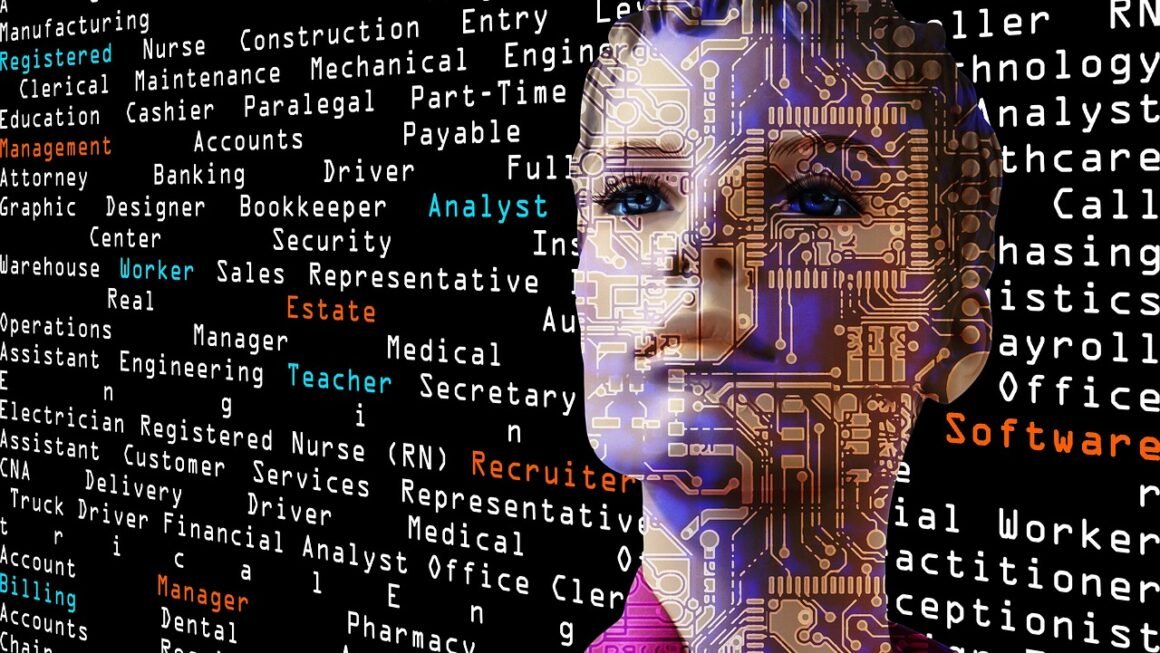
From the subtle shifts in weather patterns to the intricate melodies in a song, our world is a symphony of recurring sequences and predictable structures. The human brain, a magnificent pattern-detecting machine, constantly processes this information, helping us make sense of our surroundings, learn, and adapt. But what happens when we amplify this innate ability with technology? Enter pattern recognition – a powerful field at the intersection of computer science, artificial intelligence, and statistics that is revolutionizing how we interact with data, make decisions, and innovate across every industry imaginable. Join us as we explore the fascinating world of pattern recognition, uncovering its core principles, widespread applications, and the incredible potential it holds for the future.
What is Pattern Recognition? The Core Concept
At its heart, pattern recognition is the automated process of identifying meaningful regularities or patterns within data. It’s about taking raw, often chaotic, information and discovering underlying structures that can be used for classification, prediction, or understanding. This fundamental capability is not just confined to advanced algorithms; it’s a cornerstone of both human intelligence and the artificial intelligence systems that increasingly shape our world.
Defining the Undefinable: A Closer Look
While the concept might seem abstract, patterns are everywhere. They can be:
- Visual: Recognizing faces in a crowd, identifying objects in an image, detecting anomalies in medical scans.
- Auditory: Understanding spoken language, recognizing a specific person’s voice, identifying musical genres.
- Temporal: Predicting stock market movements, forecasting weather, detecting a recurring network intrusion.
- Behavioral: Identifying customer buying habits, flagging fraudulent transactions, diagnosing diseases based on symptoms.
In essence, pattern recognition seeks to build models that can generalize from observed data to unseen data, allowing systems to make informed decisions or predictions without explicit programming for every single scenario.
Human vs. Machine: Two Sides of the Same Coin
Our brains are exceptionally good at pattern recognition, often performing complex tasks effortlessly. Think about recognizing a friend’s face despite changes in hairstyle or lighting. However, machines excel at processing vast amounts of data at incredible speeds and identifying patterns that are too subtle or complex for humans to discern.
- Human Pattern Recognition: Often intuitive, flexible, and capable of abstract reasoning and contextual understanding. It learns from experience and adapts continuously.
- Machine Pattern Recognition: Relies on mathematical algorithms and statistical models. It’s excellent for structured data, high-volume processing, and tasks requiring precision and objectivity.
The synergy between human intuition and machine processing power is where the true strength of modern pattern recognition lies, enabling breakthroughs in fields from healthcare to finance.
Actionable Takeaway: Start consciously observing patterns in your daily life – whether it’s traffic flow, your morning routine, or subtle cues in conversations. This simple exercise can sharpen your innate pattern recognition skills.
Why Pattern Recognition Matters: Unlocking Insights and Innovation
The ability to identify and interpret patterns is not merely an academic exercise; it’s a critical driver of progress across virtually every sector. From enhancing daily conveniences to solving humanity’s most pressing challenges, the importance of pattern recognition cannot be overstated.
Driving Business Intelligence and Decision Making
Businesses thrive on insights, and pattern recognition is the engine that extracts these insights from mountains of data. It helps organizations understand past performance, predict future trends, and make strategic decisions.
- Market Analysis: Identifying emerging consumer trends, predicting product demand, and optimizing pricing strategies.
- Customer Behavior: Segmenting customers, personalizing recommendations, and detecting churn risks to improve retention. For example, e-commerce giants use pattern recognition to suggest products you might like, based on your browsing history and purchases.
- Risk Management: Assessing creditworthiness, detecting fraudulent transactions, and predicting potential system failures before they occur.
Fueling Technological Advancements
Pattern recognition is the backbone of many of the most advanced technologies we use today, particularly in the realm of Artificial Intelligence (AI) and Machine Learning (ML).
- Computer Vision: Enabling self-driving cars to “see” and interpret their surroundings (pedestrians, traffic signs), facial recognition systems, and quality control in manufacturing.
- Natural Language Processing (NLP): Powering voice assistants (Siri, Alexa), spam filters, machine translation services, and sentiment analysis tools that gauge public opinion.
- Robotics: Allowing robots to navigate complex environments, grasp objects, and interact with humans more naturally.
Enhancing Human Cognition and Learning
Beyond technology, pattern recognition is fundamental to how we learn and develop expertise. It allows us to build mental models, anticipate outcomes, and refine our skills.
- Medical Diagnostics: Doctors rely on recognizing patterns in symptoms, test results, and medical images to accurately diagnose diseases.
- Skill Acquisition: Whether it’s mastering a musical instrument, learning a new language, or excelling in sports, recognizing patterns in practice and performance is key to improvement.
- Problem-Solving: Identifying recurring patterns in challenges helps us develop effective strategies and solutions.
Actionable Takeaway: Think about a recurring problem you face at work or in your personal life. Can you identify a pattern in its occurrence or related factors? Recognizing this pattern is the first step towards a sustainable solution.
The Mechanics of Pattern Recognition: How It Works
Understanding how machines “see” and interpret patterns involves a blend of data science, statistics, and sophisticated algorithms. It’s a structured process that transforms raw information into actionable intelligence.
The Data Journey: From Raw to Recognizable
Effective pattern recognition begins long before any algorithm is applied. The quality and preparation of data are paramount.
- Data Collection: Gathering relevant data from various sources (sensors, databases, images, text).
- Data Preprocessing: Cleaning the data to remove noise, errors, and inconsistencies. This includes handling missing values, standardizing formats, and transforming data for better analysis.
- Feature Extraction: This is a crucial step where meaningful attributes (features) are identified and extracted from the raw data. For example, in facial recognition, features might include distances between eyes, nose width, or jawline shape. This reduces dimensionality and highlights relevant information.
- Feature Selection: Choosing the most impactful features to avoid overfitting and improve model performance.
Without well-prepared data and relevant features, even the most advanced algorithms will struggle to find meaningful patterns.
Algorithms in Action: The Brains Behind the Patterns
Once data is preprocessed and features are extracted, algorithms take over to learn from the data. These algorithms can generally be categorized into supervised and unsupervised learning approaches:
- Supervised Learning:
- Requires labeled data (input-output pairs). The algorithm learns a mapping function from the input features to the output labels.
- Classification: Assigning data points to predefined categories (e.g., spam or not spam, cat or dog). Common algorithms include:
- Support Vector Machines (SVM): Finds the best boundary to separate classes.
- Decision Trees/Random Forests: Creates a tree-like model of decisions and their possible consequences.
- Neural Networks: Inspired by the human brain, these are powerful for complex patterns, especially in deep learning.
- Regression: Predicting a continuous value (e.g., house prices, temperature).
- Unsupervised Learning:
- Works with unlabeled data, aiming to find inherent structures or groupings within the data.
- Clustering: Grouping similar data points together (e.g., customer segmentation based on buying habits). Popular methods include K-Means clustering.
- Dimensionality Reduction: Simplifying data while preserving important information (e.g., Principal Component Analysis for visualizing high-dimensional data).
Training and Validation: Ensuring Accuracy
A pattern recognition model needs to be trained and rigorously tested to ensure its reliability and accuracy.
- Training: The algorithm is fed a large dataset (training data) to learn the patterns and relationships between features and outcomes.
- Validation/Testing: After training, the model’s performance is evaluated on a separate, unseen dataset (test data). This ensures the model can generalize to new information and hasn’t just memorized the training data (overfitting).
- Evaluation Metrics: Depending on the task, metrics like accuracy, precision, recall, F1-score, or mean squared error are used to quantify the model’s effectiveness.
This iterative process of training, testing, and refining is crucial for building robust and effective pattern recognition systems.
Actionable Takeaway: When you hear about an AI system, remember that its effectiveness heavily depends on the quality of its training data and the careful selection of features. Garbage in, garbage out applies strongly here!
Practical Applications Across Industries
Pattern recognition is not just a theoretical concept; it’s a driving force behind countless innovations that are reshaping industries and improving our daily lives. Here are just a few examples of its pervasive influence:
Healthcare: Diagnostics and Personalized Medicine
In healthcare, pattern recognition is a game-changer, aiding in early disease detection, treatment planning, and drug discovery.
- Medical Imaging Analysis: Algorithms analyze X-rays, MRIs, and CT scans to detect anomalies like tumors or fractures with remarkable accuracy, often assisting radiologists in early diagnosis.
- Disease Prediction: Identifying patterns in patient data (genetics, lifestyle, medical history) to predict the risk of developing conditions like diabetes or heart disease.
- Drug Discovery: Accelerating the identification of potential drug compounds by recognizing patterns in molecular structures and their interactions with biological targets.
- Personalized Treatment: Tailoring treatment plans based on an individual’s unique biological and medical patterns, leading to more effective therapies.
Finance: Fraud Detection and Market Prediction
The financial sector leverages pattern recognition to safeguard assets, detect illicit activities, and gain a competitive edge in volatile markets.
- Fraud Detection: Analyzing transaction patterns to identify suspicious activities (e.g., unusual spending habits, geographical inconsistencies) that may indicate credit card fraud or money laundering.
- Algorithmic Trading: Identifying subtle patterns in market data to make high-frequency trading decisions, often executed in milliseconds.
- Credit Scoring: Assessing loan applicants’ creditworthiness by analyzing financial patterns and predicting repayment likelihood.
- Risk Management: Predicting market volatility and assessing investment risks based on historical patterns and current events.
Marketing and E-commerce: Personalization and Customer Insights
Pattern recognition is at the core of modern marketing, enabling businesses to understand customers deeply and offer highly personalized experiences.
- Recommendation Engines: Platforms like Netflix and Amazon use sophisticated algorithms to analyze viewing/purchase history and similar user behavior patterns to recommend products or content.
- Targeted Advertising: Delivering personalized advertisements to specific demographic segments based on their online behavior, interests, and past interactions.
- Customer Segmentation: Grouping customers based on shared attributes and behaviors to create more effective marketing campaigns.
- Sentiment Analysis: Analyzing patterns in customer reviews, social media posts, and feedback to gauge brand perception and product satisfaction.
Cybersecurity: Threat Detection and Prevention
In the ever-evolving landscape of cyber threats, pattern recognition is a crucial tool for protecting digital assets.
- Intrusion Detection: Identifying anomalous network traffic patterns that could indicate a cyberattack or data breach.
- Malware Detection: Recognizing patterns in code or system behavior that are characteristic of viruses, ransomware, or other malicious software.
- User Behavior Analytics: Detecting insider threats by flagging unusual employee activity patterns, such as accessing sensitive files outside working hours.
Actionable Takeaway: Consider how pattern recognition is already impacting your daily life – from the ads you see to the medical care you might receive. Understanding these applications can help you appreciate the technology’s reach and potential.
Challenges and Future Trends in Pattern Recognition
While pattern recognition offers immense opportunities, it’s not without its complexities and ethical considerations. As the field evolves, researchers and practitioners are actively addressing these challenges while exploring exciting new frontiers.
The Roadblocks: Data Bias and Interpretability
Despite its power, pattern recognition faces significant hurdles that demand careful attention:
- Data Bias: Algorithms learn from the data they’re fed. If this data contains biases (e.g., historical societal biases, underrepresentation of certain groups), the model will perpetuate and even amplify those biases, leading to unfair or discriminatory outcomes. For instance, facial recognition systems have sometimes shown lower accuracy for individuals with darker skin tones.
- Interpretability (The “Black Box” Problem): Many complex pattern recognition models, especially deep neural networks, can be difficult to interpret. It’s hard to understand exactly why they made a particular decision, which can be problematic in high-stakes fields like medicine or finance where accountability is crucial.
- Data Scarcity: For some specialized tasks, obtaining enough high-quality, labeled data for training can be a significant challenge.
- Adversarial Attacks: Malicious actors can intentionally manipulate input data to trick a pattern recognition system, leading to incorrect classifications (e.g., making a stop sign appear as a yield sign to a self-driving car).
The Horizon: Quantum Computing and Explainable AI (XAI)
The future of pattern recognition is brimming with potential, driven by advancements in computing power and a growing emphasis on ethical AI.
- Explainable AI (XAI): This emerging field aims to develop AI models that can explain their decisions in a way humans can understand, tackling the black box problem head-on. This is crucial for building trust and ensuring ethical deployment.
- Quantum Computing: While still in its early stages, quantum computing promises to revolutionize pattern recognition by processing vast datasets and complex algorithms exponentially faster than classical computers, opening doors to previously intractable problems.
- Federated Learning: A technique that allows AI models to train on decentralized datasets located on local devices (like smartphones) without sharing the raw data. This addresses privacy concerns and enables learning from diverse sources.
- Reinforcement Learning: A paradigm where AI agents learn by trial and error, optimizing their actions to achieve a goal. This is particularly promising for robotics, gaming, and complex decision-making scenarios.
The Human Element: Collaboration, Not Replacement
The future of pattern recognition isn’t about machines replacing humans, but rather about enhancing human capabilities. The most impactful applications will likely involve human-in-the-loop systems where AI identifies patterns and provides insights, and humans apply their judgment, creativity, and ethical reasoning to make final decisions. This collaborative approach ensures that the power of pattern recognition is harnessed responsibly and effectively.
Actionable Takeaway: As technology advances, critically evaluate the AI systems you interact with. Ask questions about their fairness and transparency, and support the development of explainable and ethical AI practices.
Conclusion
Pattern recognition, both an innate human ability and a sophisticated technological discipline, stands as a cornerstone of modern innovation. We’ve journeyed from understanding its fundamental definition and profound importance to exploring its intricate mechanics and diverse applications across healthcare, finance, marketing, and cybersecurity. While challenges like data bias and interpretability persist, the future of this field is bright, promising advancements in explainable AI, quantum computing, and ever more intelligent systems that will continue to reshape our world.
By harnessing the power of patterns, we unlock deeper insights, drive smarter decisions, and build a more efficient, interconnected, and intelligent future. Embracing and understanding pattern recognition isn’t just about comprehending technology; it’s about gaining a deeper appreciation for the structures that govern our universe and leveraging them to create meaningful progress for all.