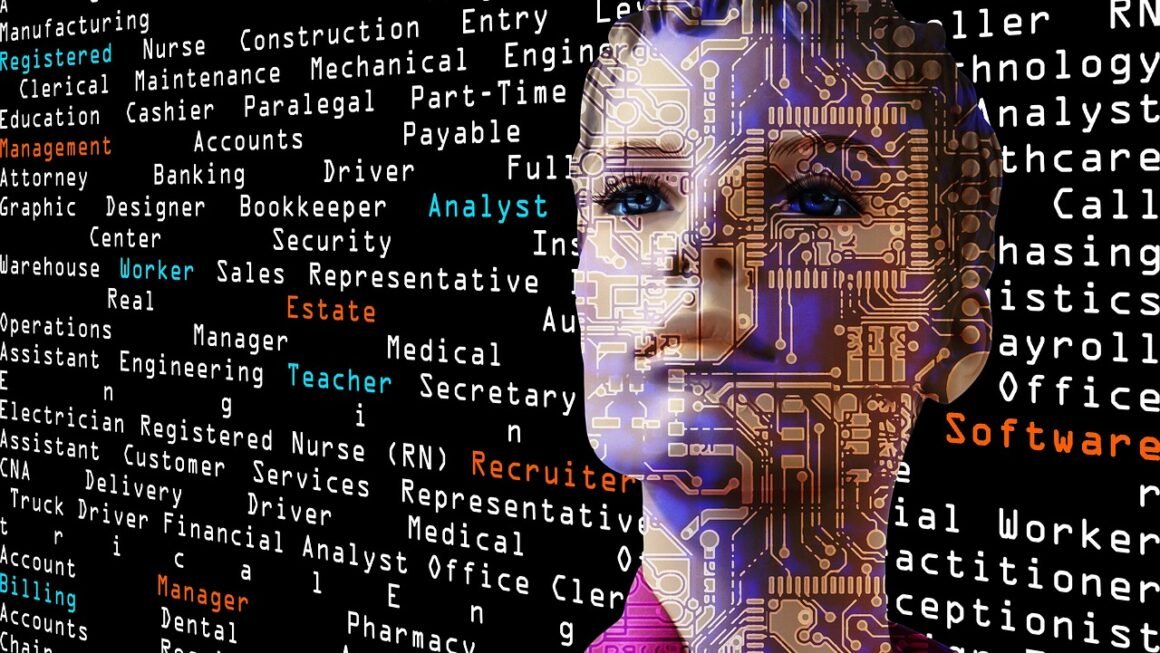
Artificial intelligence (AI) is no longer a futuristic concept; it’s a driving force rapidly reshaping industries, economies, and daily life. From powering personalized recommendations to enabling groundbreaking scientific discoveries, the journey of AI development is a testament to human ingenuity and technological advancement. This blog post delves into the multifaceted world of AI development, exploring its core components, the innovations propelling it forward, the challenges that must be overcome, its profound impact across sectors, and the exciting future that lies ahead for this transformative technology.
The Core Concepts of AI Development
Understanding AI development begins with grasping its fundamental principles and the structured approach involved in bringing intelligent systems to life. It’s a field built on data, algorithms, and computational power.
Defining AI and its Branches
Artificial Intelligence, in essence, is the simulation of human intelligence processes by machines, especially computer systems. These processes include learning (the acquisition of information and rules for using the information), reasoning (using rules to reach approximate or definite conclusions), and self-correction.
- Machine Learning (ML): A subset of AI that enables systems to learn from data, identify patterns, and make decisions with minimal human intervention. Think spam filters or fraud detection.
- Deep Learning (DL): A more advanced form of ML that uses neural networks with multiple layers (hence “deep”) to learn complex patterns, often from vast amounts of data. This powers facial recognition and natural language understanding.
- Natural Language Processing (NLP): Focuses on enabling computers to understand, interpret, and generate human language. Examples include virtual assistants like Siri or Alexa, and machine translation.
- Computer Vision (CV): Equips machines with the ability to “see” and interpret visual information from the world, such as images and videos. This is crucial for autonomous vehicles and medical image analysis.
- Robotics: Involves the design, construction, operation, and use of robots. AI enhances robotics by providing perception, decision-making, and learning capabilities.
Actionable Takeaway: Identify which branch of AI aligns best with your specific problem or project, as each requires specialized tools and expertise.
The AI Development Lifecycle
Developing an AI system follows a structured, iterative process, much like traditional software development, but with a unique emphasis on data and model training.
- Problem Definition & Data Collection: Clearly define the problem AI will solve and gather relevant, high-quality data. For instance, if building a recommendation engine, collect user browsing history and purchase data.
- Data Preparation & Preprocessing: Clean, normalize, and transform raw data into a suitable format for training. This often involves handling missing values, scaling features, and encoding categorical data.
- Model Selection & Training: Choose an appropriate AI model (e.g., a regression model, a neural network) and train it using the prepared data. This is where the model learns patterns.
- Model Evaluation & Tuning: Assess the model’s performance using metrics (accuracy, precision, recall) and fine-tune its parameters to optimize results. Cross-validation is a common technique here.
- Deployment & Integration: Integrate the trained model into a production environment, making it accessible to users or other systems. This could involve deploying it as an API.
- Monitoring & Maintenance: Continuously monitor the model’s performance in real-world scenarios and retrain it with new data as needed to prevent performance degradation (model drift).
Practical Example: Developing a chatbot for customer service involves collecting conversational data, cleaning it, choosing an NLP model, training it to understand queries, testing its responses, deploying it on a website, and continuously updating it with new FAQs.
Key Technologies and Tools Driving AI Innovation
The rapid advancement in AI is significantly fueled by an ecosystem of powerful technologies and tools that empower developers to build sophisticated intelligent systems.
Programming Languages & Frameworks
The right choice of language and framework can significantly impact the efficiency and scalability of AI projects.
- Python: Dominates the AI landscape due to its simplicity, vast libraries (NumPy, Pandas, Scikit-learn), and strong community support. It’s the go-to for rapid prototyping and production-grade systems.
- TensorFlow: Developed by Google, this open-source library is a powerful tool for numerical computation and large-scale machine learning, especially deep learning. It supports both research and production deployment.
- PyTorch: Developed by Facebook, PyTorch is known for its flexibility and ease of use, particularly favored in research and for deep learning applications requiring dynamic computational graphs.
- Keras: A high-level API for building and training deep learning models, often running on top of TensorFlow or Theano. It’s excellent for quick experimentation and beginners.
Actionable Takeaway: Master Python for AI development and become proficient in at least one major deep learning framework like TensorFlow or PyTorch. Many online courses offer practical training in these areas.
Data Infrastructure & Cloud Platforms
The massive data requirements and computational intensity of AI necessitate robust infrastructure, often provided by cloud computing services.
- Cloud Computing (AWS, Azure, GCP): These platforms offer scalable compute power, specialized AI services (e.g., AWS SageMaker, Azure Machine Learning, Google AI Platform), and vast data storage solutions, making AI development accessible without huge upfront hardware investments.
- Big Data Technologies (Hadoop, Spark): For handling and processing large volumes of structured and unstructured data, tools like Apache Hadoop for distributed storage and Apache Spark for in-memory data processing are indispensable.
- Databases (SQL & NoSQL): Efficient data management is critical. SQL databases are ideal for structured data, while NoSQL databases (e.g., MongoDB, Cassandra) handle unstructured and semi-structured data common in AI.
Practical Example: A startup building a new recommendation engine might use AWS S3 for storing user data, AWS EC2 instances with GPUs for training deep learning models using TensorFlow, and AWS Lambda for serving real-time predictions.
Specialized Hardware (GPUs, TPUs)
Traditional CPUs are not efficient enough for the parallel computations required by many AI algorithms, especially deep learning.
- Graphics Processing Units (GPUs): Originally designed for rendering graphics, GPUs are highly parallel processors perfect for the matrix multiplications and computations central to neural networks. NVIDIA’s CUDA platform has been pivotal.
- Tensor Processing Units (TPUs): Custom-built ASICs (Application-Specific Integrated Circuits) developed by Google specifically for machine learning workloads, particularly for TensorFlow. They offer even greater efficiency for certain types of AI tasks.
Actionable Takeaway: For compute-intensive AI projects, leverage cloud-based GPU/TPU instances to accelerate training times and reduce development costs. Consider exploring frameworks optimized for these hardware accelerators.
Navigating the Challenges in AI Development
While AI offers immense potential, its development path is paved with significant challenges that require careful consideration and innovative solutions.
Data Scarcity & Quality Issues
The adage “garbage in, garbage out” holds especially true for AI. Data is the lifeblood of most AI systems.
- Lack of Labeled Data: Many powerful AI models, especially supervised learning models, require vast amounts of meticulously labeled data, which can be expensive and time-consuming to acquire.
- Data Bias: If training data reflects existing societal biases (e.g., gender, race), the AI model will learn and perpetuate these biases, leading to unfair or discriminatory outcomes.
- Data Privacy & Security: Handling sensitive personal data for AI training raises significant privacy concerns and demands robust security measures to comply with regulations like GDPR and CCPA.
- Data Drift: Real-world data distributions can change over time, causing a deployed AI model’s performance to degrade. This requires continuous monitoring and retraining.
Actionable Takeaway: Implement robust data governance strategies from the outset. Explore techniques like data augmentation, synthetic data generation, and active learning to address data scarcity. Conduct thorough bias audits on datasets and models.
Ethical AI & Bias Mitigation
As AI becomes more pervasive, ensuring its ethical development and deployment is paramount to maintaining public trust and avoiding harm.
- Algorithmic Bias: Beyond data bias, biases can also be introduced through algorithm design choices or feature engineering, leading to unfair predictions or classifications.
- Lack of Transparency (Black Box Problem): Many complex AI models, particularly deep neural networks, are “black boxes,” making it difficult to understand how they arrive at their decisions, which is problematic in critical applications like healthcare or finance.
- Accountability & Responsibility: Determining who is responsible when an autonomous AI system makes a mistake or causes harm is a complex legal and ethical challenge.
- Fairness & Equity: Ensuring AI systems treat all individuals and groups fairly, without discrimination, requires proactive measures in design, testing, and deployment.
Practical Example: A hiring AI that disproportionately filters out female candidates due to historical male-dominated resume data is an example of algorithmic bias. Mitigation involves auditing the model for fairness metrics, using debiasing techniques on the data or model, and ensuring diverse teams are involved in development.
Deployment & Scalability Hurdles
Moving an AI model from a successful experiment to a production-ready, scalable service presents its own set of challenges.
- Infrastructure Requirements: Deploying complex AI models often demands significant computational resources and robust infrastructure, especially for real-time inference at scale.
- Integration Complexity: Integrating AI models into existing software systems can be complex, requiring seamless API development, robust error handling, and careful system design.
- Model Maintenance & Monitoring: Post-deployment, models need continuous monitoring for performance degradation, data drift, and potential biases. Retraining and updating models can be resource-intensive.
Actionable Takeaway: Adopt MLOps (Machine Learning Operations) practices to streamline the AI lifecycle from development to deployment and maintenance. Utilize cloud-native services designed for AI deployment to manage scalability and infrastructure. Focus on explainable AI (XAI) techniques to build trust and facilitate auditing.
Practical Applications and Industry Impact of AI
AI is not just an abstract concept; it’s a practical technology driving transformative change across virtually every industry, enhancing efficiency, fostering innovation, and creating new opportunities.
Healthcare & Pharmaceuticals
AI is revolutionizing how medical care is delivered, diseases are diagnosed, and new treatments are discovered.
- Drug Discovery: AI algorithms can analyze vast chemical databases to identify potential drug candidates and predict their efficacy, significantly accelerating the drug development process.
- Diagnostic Imaging: Computer Vision models assist radiologists in detecting subtle anomalies in X-rays, MRIs, and CT scans, leading to earlier and more accurate diagnoses of conditions like cancer.
- Personalized Medicine: AI analyzes patient data (genomics, medical history, lifestyle) to tailor treatment plans, optimizing outcomes and minimizing adverse effects.
- Predictive Analytics: AI can predict disease outbreaks, identify patients at high risk of developing certain conditions, and optimize hospital resource allocation.
Practical Example: Google’s DeepMind developed an AI that can detect over 50 eye diseases with high accuracy by analyzing OCT scans, often outperforming human experts.
Finance & E-commerce
From securing transactions to personalizing shopping experiences, AI is a cornerstone of modern financial services and online retail.
- Fraud Detection: AI models analyze transaction patterns in real-time to identify and flag suspicious activities, preventing financial fraud more effectively than traditional rule-based systems.
- Algorithmic Trading: AI-powered algorithms execute trades based on market analysis and predictive models, often reacting faster than human traders.
- Personalized Recommendations: E-commerce platforms use AI to analyze browsing and purchase history, recommending products tailored to individual customer preferences, boosting sales.
- Customer Service Chatbots: AI-driven chatbots handle routine customer inquiries, providing instant support and freeing human agents for more complex issues.
Actionable Takeaway: For businesses, investing in AI for customer experience and fraud prevention can yield significant ROI. Data privacy and security are paramount in these sectors.
Manufacturing & Logistics
AI is optimizing supply chains, enhancing operational efficiency, and transforming factory floors into smart environments.
- Predictive Maintenance: Sensors collect data from machinery, which AI analyzes to predict equipment failures before they occur, reducing downtime and maintenance costs.
- Quality Control: Computer Vision systems inspect products on assembly lines for defects with high precision and speed, ensuring consistent quality.
- Supply Chain Optimization: AI predicts demand fluctuations, optimizes inventory levels, and identifies the most efficient routes for delivery, leading to significant cost savings and improved reliability.
- Robotics & Automation: AI-powered robots perform repetitive tasks with precision and can adapt to changing production needs, enhancing safety and productivity.
Practical Example: Companies like Siemens use AI to monitor turbine performance, predicting maintenance needs weeks in advance, thereby preventing costly outages and extending asset lifespan.
The Future Landscape of AI Development
The journey of AI development is far from over. We are on the cusp of even more profound innovations that will redefine our relationship with technology and reshape society.
Emerging Trends
Several cutting-edge areas are poised to drive the next wave of AI advancements.
- Generative AI: Models like GPT-4 and DALL-E 2 are capable of generating highly realistic text, images, audio, and even code, pushing the boundaries of creativity and content generation.
- Explainable AI (XAI): As AI models grow more complex, XAI focuses on developing techniques that allow humans to understand, interpret, and trust the decisions made by AI, crucial for critical applications.
- Artificial General Intelligence (AGI): The long-term goal of creating AI that possesses human-like cognitive abilities, capable of performing any intellectual task a human can. While still distant, research continues to progress.
- Quantum AI: The intersection of quantum computing and AI, potentially enabling the processing of data and training of models at speeds and scales currently unimaginable, tackling problems intractable for classical computers.
- Edge AI: Deploying AI models directly on devices (e.g., smartphones, IoT sensors) to enable real-time processing without relying on cloud connectivity, enhancing privacy and reducing latency.
Practical Example: A marketing team using a generative AI model to quickly create multiple ad copy variations or image concepts, then iterating based on performance data, significantly shortening campaign development cycles.
Skills for the Evolving AI Ecosystem
The demand for AI professionals continues to grow, requiring a blend of technical expertise and soft skills.
- Strong Programming Skills: Proficiency in Python and relevant AI libraries.
- Mathematical & Statistical Foundations: A solid understanding of linear algebra, calculus, probability, and statistics.
- Data Engineering: Skills in data collection, cleaning, storage, and pipeline management.
- Domain Expertise: Understanding the specific industry or problem area where AI is being applied.
- Ethical Reasoning & Critical Thinking: The ability to identify and address ethical implications and biases in AI systems.
- Continuous Learning: The AI field evolves rapidly, necessitating a commitment to lifelong learning and staying updated with new research and tools.
Actionable Takeaway: For aspiring AI developers, focus on foundational knowledge in mathematics and programming, coupled with practical experience through projects. For established professionals, prioritize continuous learning in emerging AI trends and ethical considerations.
Regulatory & Societal Considerations
As AI becomes more powerful, robust regulatory frameworks and societal dialogues are essential to guide its responsible development.
- Data Governance & Privacy: Stricter regulations regarding data collection, usage, and storage are likely to evolve to protect individual privacy.
- Safety & Reliability: Ensuring AI systems are safe, reliable, and robust, especially in critical applications like autonomous vehicles or medical devices.
- Economic & Workforce Impact: Addressing potential job displacement due to automation and focusing on retraining and upskilling initiatives.
- International Cooperation: Developing global standards and ethical guidelines for AI to prevent an uneven playing field and ensure universal benefits.
Actionable Takeaway: Participate in discussions about AI ethics and regulation, advocating for frameworks that balance innovation with safety and fairness. Businesses should proactively integrate ethical AI principles into their development processes.
Conclusion
AI development stands at the forefront of technological innovation, promising a future brimming with possibilities. From deciphering complex data patterns to automating intricate tasks and inspiring new forms of creativity, AI’s trajectory is one of continuous evolution. While challenges related to data quality, ethics, and deployment persist, the collective efforts of researchers, developers, and policymakers are paving the way for more robust, fair, and beneficial AI systems. Embracing the power of AI responsibly, fostering interdisciplinary collaboration, and committing to continuous learning will be crucial in harnessing this transformative technology to build a more intelligent and prosperous future for all.