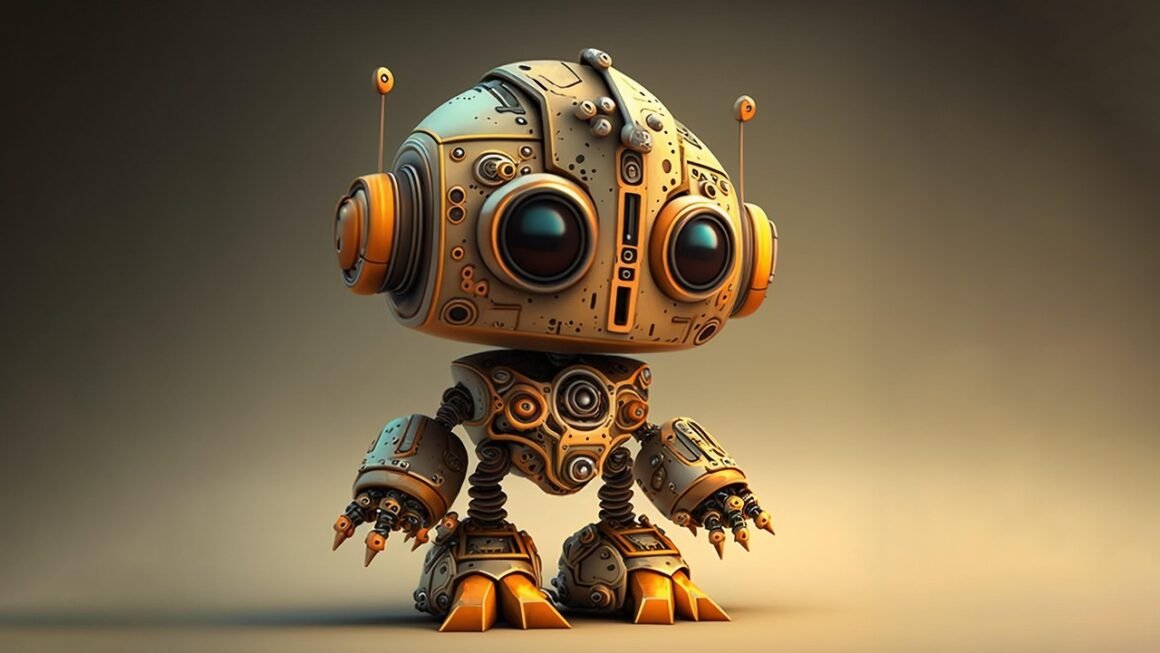
Artificial Intelligence (AI) is no longer a futuristic concept confined to science fiction; it’s a transformative force reshaping industries, revolutionizing daily life, and driving unprecedented innovation. From powering sophisticated recommendation engines that suggest your next favorite show to aiding in the early detection of diseases, AI applications are expanding at an astonishing pace, impacting virtually every sector imaginable. This blog post delves deep into the diverse and powerful ways AI is being applied today, highlighting its immense potential and practical implications across various domains.
AI in Business and Enterprise Solutions
In the competitive corporate landscape, AI has emerged as a crucial differentiator, empowering businesses to optimize operations, enhance customer experiences, and make data-driven decisions. Its ability to process vast amounts of data, automate repetitive tasks, and predict trends offers a significant strategic advantage.
Customer Service and CRM
AI-powered chatbots and virtual assistants are revolutionizing customer interactions, providing instant support and personalizing communication. These systems can handle a large volume of queries, freeing human agents for more complex issues.
- 24/7 Availability: Chatbots can assist customers around the clock, improving response times and satisfaction.
- Personalized Experiences: AI analyzes past interactions and preferences to offer tailored product recommendations or solutions.
- Efficiency Gains: Resolving common issues automatically reduces operational costs and improves agent productivity.
Example: Many e-commerce sites use AI chatbots to answer FAQs about shipping, returns, or product details, and CRM platforms leverage AI to analyze customer sentiment and route urgent issues to human agents more effectively.
Data Analytics and Business Intelligence
AI’s analytical capabilities are transforming how businesses extract insights from their data. Machine learning algorithms can identify patterns, anomalies, and correlations that human analysts might miss, leading to more informed strategic planning.
- Predictive Analytics: Forecasting sales trends, market demand, and potential risks based on historical data.
- Fraud Detection: AI algorithms detect unusual transaction patterns indicative of fraud in real-time.
- Optimized Decision-Making: Providing actionable insights for pricing strategies, marketing campaigns, and resource allocation.
Actionable Takeaway: Businesses should invest in AI-powered analytics platforms to uncover hidden opportunities and mitigate risks, turning raw data into strategic assets.
Automated Operations and RPA
Robotic Process Automation (RPA) combined with AI, particularly machine learning and natural language processing (NLP), automates repetitive, rule-based business processes, leading to increased efficiency and accuracy.
- Invoice Processing: AI can extract relevant information from invoices, validate it, and initiate payments.
- Onboarding & HR: Automating document processing, background checks, and initial screening of job applications.
- Supply Chain Management: Optimizing inventory levels, order processing, and logistics through AI-driven forecasting.
Statistic: According to a recent report by McKinsey, companies that adopt AI for operations see an average 15% increase in efficiency and a 10% reduction in operational costs.
AI in Healthcare and Life Sciences
The healthcare sector is experiencing a profound transformation thanks to AI, promising more accurate diagnoses, personalized treatments, and accelerated drug discovery. AI’s ability to analyze vast medical datasets is unlocking new possibilities for patient care and medical research.
Medical Imaging and Diagnostics
AI, particularly deep learning and computer vision, is revolutionizing how medical images are interpreted, leading to earlier and more accurate disease detection.
- Radiology: AI algorithms can identify subtle abnormalities in X-rays, MRIs, and CT scans that might be missed by the human eye, such as early signs of cancer or neurological disorders.
- Pathology: Analyzing tissue samples to detect cancer cells with high precision, assisting pathologists in making critical diagnoses.
- Ophthalmology: Detecting diabetic retinopathy and other eye conditions from retinal scans, often outperforming human specialists.
Example: Google Health’s AI system has shown promise in detecting breast cancer from mammograms with accuracy comparable to, and in some cases surpassing, human radiologists.
Drug Discovery and Development
The traditional drug discovery process is lengthy, expensive, and often unsuccessful. AI significantly streamlines this process by identifying potential drug candidates, predicting their efficacy, and optimizing clinical trials.
- Target Identification: AI analyzes genomic and proteomic data to identify disease-causing targets.
- Molecule Synthesis: Generating novel molecular structures with desired properties and predicting their interactions with biological targets.
- Clinical Trial Optimization: Identifying suitable patient cohorts, predicting trial outcomes, and monitoring patient responses more effectively.
Actionable Takeaway: Pharmaceutical companies are leveraging AI to reduce the time and cost associated with bringing new life-saving drugs to market, accelerating innovation in personalized medicine.
Personalized Treatment Plans
AI enables healthcare providers to tailor treatments to individual patients based on their genetic makeup, medical history, lifestyle, and unique disease characteristics.
- Genomic Analysis: Analyzing a patient’s DNA to predict disease susceptibility and drug response, guiding precision oncology and pharmacogenomics.
- Predictive Risk Assessment: Identifying patients at high risk for certain conditions (e.g., heart attack, sepsis) allowing for proactive interventions.
Detail: AI-powered tools can help doctors select the most effective cancer therapies by comparing a patient’s tumor profile against a vast database of treatment outcomes.
AI in Everyday Life and Consumer Tech
AI has seamlessly integrated into our daily routines, enhancing convenience, entertainment, and personal productivity. From the moment we wake up to the time we go to bed, AI-powered applications are constantly working behind the scenes.
Voice Assistants and Smart Homes
Voice assistants like Amazon Alexa, Google Assistant, and Apple Siri have become ubiquitous, acting as central hubs for smart home control and information retrieval.
- Smart Home Automation: Controlling lights, thermostats, security systems, and appliances with voice commands.
- Information & Tasks: Answering questions, setting reminders, playing music, and making calls hands-free.
- Personalized Experiences: Learning user preferences and routines to proactively offer assistance or suggest actions.
Example: A smart thermostat uses AI to learn your daily schedule and preferred temperatures, automatically adjusting settings to optimize comfort and energy efficiency.
Recommendation Systems
One of the most pervasive AI applications in consumer tech, recommendation systems are designed to personalize content and product discovery, driving engagement and sales across various platforms.
- Streaming Services: Suggesting movies, TV shows, and music based on viewing/listening history, ratings, and genre preferences (e.g., Netflix, Spotify).
- E-commerce Platforms: Recommending products based on past purchases, browsing behavior, and similar user profiles (e.g., Amazon, eBay).
- Social Media: Curating news feeds and suggesting connections or content that aligns with user interests.
Statistic: It’s estimated that recommendation systems drive around 35% of Amazon’s sales and over 80% of Netflix’s viewer activity, highlighting their immense commercial impact.
AI in Education
AI is transforming learning experiences by providing personalized instruction, automating administrative tasks, and making education more accessible.
- Personalized Learning Paths: Adaptive learning platforms use AI to assess student progress and tailor content, pace, and exercises to individual needs.
- Automated Grading: AI can grade quizzes, essays, and coding assignments, providing instant feedback to students and reducing teacher workload.
- Language Learning: AI-powered apps offer interactive lessons, pronunciation feedback, and conversation practice.
Actionable Takeaway: Educators can leverage AI tools to create more engaging and effective learning environments, catering to diverse student requirements.
AI in Industry and Manufacturing
The industrial sector is undergoing a profound transformation with the integration of AI, leading to smart factories, optimized supply chains, and enhanced operational safety. AI-driven solutions are boosting productivity, reducing waste, and improving overall quality.
Predictive Maintenance and Quality Control
AI algorithms analyze sensor data from machinery to predict equipment failures before they occur, significantly reducing downtime and maintenance costs. For quality control, computer vision AI systems inspect products with unparalleled accuracy.
- Reduced Downtime: Predicting potential failures allows for scheduled maintenance, avoiding costly unplanned stoppages.
- Optimized Lifespan: Extending the operational life of assets by performing maintenance only when needed, not on a fixed schedule.
- Flaw Detection: AI-powered cameras identify defects in manufacturing processes with microscopic precision, ensuring higher product quality.
Example: In automotive manufacturing, AI monitors welding robots and assembly lines, detecting anomalies that could indicate future malfunctions or produce faulty components, often with 99% accuracy.
Robotics and Automation
AI is the brain behind advanced robotics, enabling robots to perform complex tasks, learn from their environment, and collaborate with humans in dynamic industrial settings.
- Collaborative Robots (Cobots): AI allows robots to safely work alongside human employees, assisting with assembly, packaging, and material handling.
- Autonomous Mobile Robots (AMRs): Navigating warehouses and factories independently to transport goods, optimizing logistics and reducing manual labor.
- Precision Manufacturing: Robots equipped with AI can perform intricate tasks requiring high precision, such as micro-assembly or delicate material handling.
Detail: Modern warehouses use AI-driven robots for inventory management, sorting, and fulfillment, significantly speeding up order processing and reducing errors.
Supply Chain Optimization
AI provides end-to-end visibility and intelligence across the entire supply chain, from raw material sourcing to final product delivery, mitigating risks and enhancing efficiency.
- Demand Forecasting: Predicting demand fluctuations more accurately, minimizing overstocking and stockouts.
- Logistics Optimization: AI algorithms plan the most efficient delivery routes, manage fleet maintenance, and optimize warehouse layouts.
- Risk Management: Identifying potential disruptions (e.g., weather events, geopolitical issues) and suggesting alternative strategies.
Actionable Takeaway: Manufacturers adopting AI in their production lines and supply chains report significant improvements in operational efficiency, waste reduction, and overall product quality.
The Future of AI: Emerging Trends and Ethical Considerations
As AI continues to evolve, new frontiers are being explored, promising even more profound impacts. However, this rapid advancement also necessitates a keen focus on ethical development and deployment to ensure AI benefits all of humanity responsibly.
Explainable AI (XAI)
As AI systems become more complex, understanding why they make certain decisions becomes crucial, especially in high-stakes fields like healthcare or finance. XAI aims to make AI models more transparent and interpretable.
- Trust and Accountability: Enabling users to understand and trust AI outputs, particularly important in regulated industries.
- Bias Detection: Helping developers identify and mitigate biases embedded in AI models, leading to fairer outcomes.
- Improved Debugging: Making it easier to diagnose and fix errors or unintended behaviors in AI systems.
Detail: In medical diagnosis, XAI can explain why an AI identified a particular lesion as malignant, providing doctors with crucial context for their decisions.
Generative AI and Creativity
Beyond analysis and automation, AI is increasingly demonstrating capabilities in generating novel content, from art and music to text and code, pushing the boundaries of creativity.
- Content Creation: AI models like GPT-4 can write articles, generate marketing copy, and even assist with screenplay writing.
- Art & Design: AI tools create unique visual art, design logos, and generate architectural concepts based on prompts.
- Drug Discovery (Advanced): AI can design novel protein structures and drug molecules, accelerating R&D significantly.
Example: Tools like DALL-E 2 and Midjourney generate stunning images from text descriptions, opening up new avenues for artists and designers.
Ethical AI Development
The widespread adoption of AI brings with it critical ethical considerations concerning privacy, bias, accountability, and the societal impact of automation. Responsible AI development is paramount.
- Data Privacy: Ensuring that personal data used by AI systems is collected, stored, and processed responsibly and securely.
- Algorithmic Bias: Actively working to prevent and mitigate biases in AI algorithms that could lead to discrimination or unfair treatment.
- Human Oversight: Maintaining a human-in-the-loop approach for critical decisions and ensuring accountability for AI actions.
- Job Displacement: Addressing the socio-economic impacts of automation and preparing the workforce for an AI-augmented future.
Actionable Takeaway: As AI becomes more integrated, developers, policymakers, and businesses must prioritize ethical guidelines and robust regulatory frameworks to ensure AI serves humanity positively and equitably.
Conclusion
The landscape of AI applications is vast and ever-expanding, profoundly impacting nearly every facet of our lives and industries. From revolutionizing business operations and accelerating medical breakthroughs to enhancing our daily conveniences and spurring new forms of creativity, Artificial Intelligence is undeniably a driving force of modern progress. While the benefits are immense, the journey ahead also calls for thoughtful consideration of ethical implications and responsible development. Embracing AI’s potential while navigating its challenges will be key to harnessing its power for a more efficient, innovative, and intelligent future.