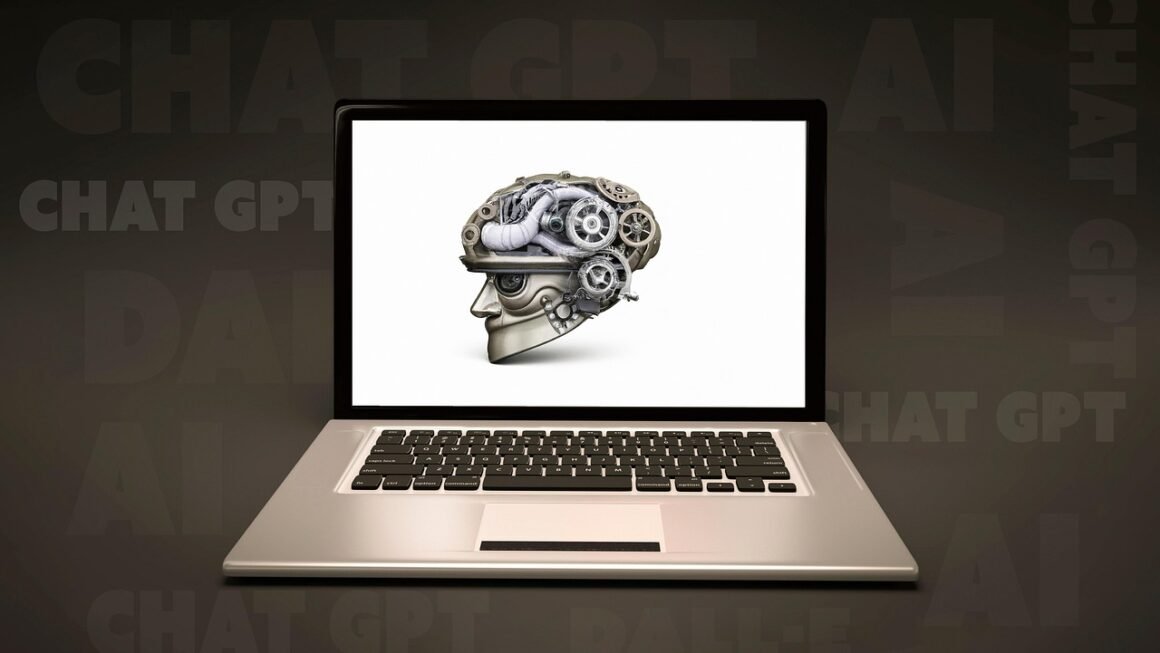
The dawn of artificial intelligence has ushered in an era of unprecedented innovation, transforming the way we work, create, and interact with the world. From automating mundane tasks to generating breathtaking art, AI tools are no longer the stuff of science fiction but essential instruments driving progress across every industry. Whether you’re a business owner seeking to streamline operations, a marketer aiming for hyper-personalized campaigns, or a creative looking to unlock new possibilities, understanding and leveraging the power of AI tools is paramount in today’s rapidly evolving digital landscape. This comprehensive guide will explore the diverse world of AI tools, highlighting their practical applications and immense potential to reshape our future.
Understanding the AI Landscape: What are AI Tools?
Artificial Intelligence (AI) tools encompass a broad spectrum of software, platforms, and algorithms designed to simulate human intelligence. These tools are built upon advanced machine learning models, enabling them to learn from data, identify patterns, make predictions, and even generate new content with remarkable accuracy and speed. They are at the heart of the ongoing digital transformation, offering capabilities that significantly enhance human potential and operational efficiency.
The Core Components of AI Tools
- Machine Learning (ML): The foundational technology that allows systems to learn from data without explicit programming. This includes supervised, unsupervised, and reinforcement learning.
- Deep Learning (DL): A subset of ML that uses neural networks with multiple layers (deep neural networks) to learn complex patterns, especially effective for image recognition, speech recognition, and natural language processing.
- Natural Language Processing (NLP): Enables computers to understand, interpret, and generate human language. This is crucial for chatbots, language translation, and content summarization tools.
- Computer Vision: Allows computers to “see” and interpret visual information from images and videos, used in facial recognition, object detection, and autonomous vehicles.
- Predictive Analytics: Utilizes statistical algorithms and machine learning techniques to identify the likelihood of future outcomes based on historical data.
Evolution and Impact
AI tools have evolved from rudimentary expert systems to sophisticated, self-learning platforms. Initially limited to specialized tasks, modern AI is now integrated into everyday applications, making it accessible to a wider audience. This evolution has led to a significant increase in productivity, data-driven decision-making, and innovative solutions across various sectors.
- Actionable Takeaway: Begin by identifying the core AI capabilities (ML, NLP, Computer Vision) that are most relevant to your specific needs or industry. Understanding these fundamentals will help you choose the right tools.
Boosting Productivity and Efficiency with AI
One of the most immediate and tangible benefits of AI tools is their ability to supercharge productivity and efficiency. By automating repetitive tasks, providing intelligent insights, and streamlining workflows, AI empowers individuals and teams to focus on higher-value activities and achieve more in less time.
AI in Workflow Automation
AI-powered automation tools can take over routine, time-consuming tasks, freeing up human capital for more strategic endeavors. This not only reduces operational costs but also minimizes errors and accelerates processes.
- Task Automation Examples:
- Email Management: AI tools can sort, prioritize, and even draft responses to emails, reducing inbox clutter and response times.
- Data Entry and Processing: Optical Character Recognition (OCR) combined with AI can extract information from documents and automatically input it into databases.
- Scheduling and Calendar Management: AI assistants can coordinate meetings, send reminders, and optimize schedules based on availability and preferences.
- Practical Tip: Identify the top 3-5 most repetitive tasks in your daily or weekly routine. Research AI tools specifically designed to automate these tasks to see immediate productivity gains.
Personalized Assistance & Task Management
AI assistants act as intelligent partners, helping manage workloads, provide quick information, and enhance decision-making.
- Virtual Assistants: Tools like ChatGPT, Google Assistant, or specialized AI assistants can answer queries, summarize documents, brainstorm ideas, and even generate basic code snippets.
- Project Management Integration: AI can analyze project timelines, identify potential bottlenecks, suggest resource allocation, and even predict project completion dates with greater accuracy.
- Smart Reminders & Notifications: AI learns your habits and priorities to deliver personalized reminders and notifications, ensuring you stay on track with critical tasks.
Data Analysis and Insights
AI tools excel at processing vast amounts of data, uncovering patterns and insights that would be impossible for humans to detect manually. This leads to better, more informed decision-making.
- Business Intelligence: AI platforms can analyze sales data, customer behavior, market trends, and operational metrics to provide actionable insights for business strategy.
- Predictive Maintenance: In manufacturing and logistics, AI monitors equipment performance to predict potential failures, allowing for proactive maintenance and reducing downtime.
- Financial Forecasting: AI algorithms can analyze historical financial data, market indicators, and economic trends to generate more accurate financial forecasts.
- Actionable Takeaway: Implement an AI-powered automation tool for at least one core business process (e.g., customer support routing, report generation) to experience direct benefits in efficiency and cost savings.
AI for Creativity and Content Generation
Contrary to the misconception that AI stifles creativity, modern AI tools are proving to be powerful allies for creators. They can generate content, inspire new ideas, and streamline the creative process, opening up new frontiers for artists, writers, and designers.
Writing and Copywriting Tools
AI-powered writing assistants are revolutionizing content creation, from crafting compelling marketing copy to generating lengthy articles. These tools leverage advanced NLP to produce human-like text at scale.
- Content Generation: Tools like Jasper, Copy.ai, and Writesonic can generate blog posts, social media captions, product descriptions, email subject lines, and even entire articles based on a few prompts.
- Text Summarization: AI can distill long documents into concise summaries, saving time for research and review.
- Grammar and Style Correction: Tools such as Grammarly and ProWritingAid use AI to enhance clarity, correct errors, and suggest style improvements, making your writing more polished and professional.
- Translation Services: AI-powered translation tools (e.g., DeepL, Google Translate) offer accurate and context-aware translations, breaking down language barriers for global communication.
Example: A marketing team can use an AI writing assistant to quickly generate 20 unique ad headlines for an A/B test in minutes, a task that would traditionally take hours for a human copywriter.
Image and Video Generation
The ability of AI to create original visual content is transforming industries like graphic design, marketing, and entertainment.
- Text-to-Image Generation: Platforms like DALL-E 2, Midjourney, and Stable Diffusion can generate stunning, unique images from simple text descriptions, offering endless possibilities for visual content.
- Image Editing and Enhancement: AI can automatically remove backgrounds, upscale low-resolution images, retouch photos, and even generate missing parts of an image (inpainting).
- Video Creation and Editing: AI tools can generate short video clips from text, create animated characters, assist with video editing by identifying key moments, and even add realistic voiceovers.
Music and Audio Production
AI is also making its mark in the auditory realm, assisting with composition and sound design.
- AI Music Composition: Tools like AIVA or Amper Music can compose original musical pieces in various styles and genres, useful for background music, game scores, or creative exploration.
- Voice Synthesis: Advanced text-to-speech AI can generate natural-sounding voiceovers in multiple languages, beneficial for podcasts, audiobooks, and accessibility features.
- Audio Enhancement: AI can remove noise, enhance speech clarity, and master audio tracks for professional quality sound.
- Actionable Takeaway: Experiment with an AI content generation tool (e.g., for writing or image creation) for a small project. Use it to overcome creative blocks or generate variations that you can then refine, not replace, your creative input.
Revolutionizing Business Operations with AI
Businesses of all sizes are leveraging AI tools to optimize operations, enhance customer experiences, and drive unprecedented growth. AI’s ability to process and act on data at scale is a game-changer for competitive advantage.
Customer Service and Support
AI is transforming customer interactions, making service faster, more efficient, and personalized.
- AI Chatbots: Intelligent chatbots can handle a high volume of customer inquiries 24/7, answer FAQs, guide users through processes, and resolve common issues without human intervention. This significantly reduces response times and improves customer satisfaction.
- Sentiment Analysis: AI tools can analyze customer feedback (emails, social media, reviews) to gauge sentiment, identify pain points, and alert businesses to potential issues before they escalate.
- Personalized Recommendations: AI algorithms power recommendation engines (e.g., on e-commerce sites) that suggest products or services based on a customer’s browsing history, purchase patterns, and preferences, boosting sales.
Statistic: According to a recent study, AI-powered chatbots can reduce customer service costs by up to 30%.
Marketing and Sales Optimization
AI provides marketers and sales teams with unparalleled insights and automation capabilities to engage customers more effectively and close deals faster.
- Targeted Advertising: AI analyzes vast datasets to identify ideal customer segments, allowing for highly targeted and personalized ad campaigns that yield better conversion rates.
- Lead Scoring: AI tools can score leads based on their likelihood to convert, helping sales teams prioritize their efforts and focus on the most promising prospects.
- Dynamic Pricing: AI algorithms can adjust product prices in real-time based on demand, competitor pricing, inventory levels, and other market factors to maximize revenue.
- Content Personalization: AI can dynamically customize website content, email campaigns, and product recommendations for individual users, creating highly engaging experiences.
Security and Fraud Detection
AI plays a critical role in protecting businesses and consumers from cyber threats and fraudulent activities.
- Anomaly Detection: AI systems can monitor network traffic and user behavior patterns, identifying unusual activities that might indicate a cyberattack or insider threat.
- Fraud Prevention: In finance and e-commerce, AI analyzes transaction data in real-time to detect and prevent fraudulent transactions, protecting both businesses and customers.
- Threat Intelligence: AI aggregates and analyzes global threat data to provide up-to-date intelligence on emerging cyber threats, allowing organizations to bolster their defenses proactively.
- Actionable Takeaway: Explore implementing an AI chatbot on your website for basic customer inquiries. This can free up your support team for complex issues and provide immediate assistance to visitors.
Navigating the Future: Challenges and Ethical Considerations
While the potential of AI tools is immense, their widespread adoption also brings forth important challenges and ethical considerations that demand careful attention. Addressing these concerns is crucial for ensuring AI development and deployment benefits society responsibly.
Ethical AI and Responsible Use
The ethical implications of AI are at the forefront of discussions, emphasizing the need for fairness, transparency, and accountability in AI systems.
- Bias in AI: AI models can inherit and amplify biases present in their training data, leading to unfair or discriminatory outcomes. Developers must actively work to identify and mitigate these biases.
- Transparency and Explainability: The “black box” nature of some AI algorithms makes it difficult to understand how they arrive at decisions. There’s a growing need for explainable AI (XAI) to build trust and allow for auditing.
- Accountability: Establishing who is responsible when an AI system makes an error or causes harm is a complex legal and ethical challenge that requires clear frameworks.
Practical Tip: When evaluating AI tools, inquire about their data sources, bias mitigation strategies, and how their decision-making processes are documented or explained. Opt for tools from vendors committed to ethical AI principles.
Data Privacy and Security
AI tools often require access to vast amounts of data, raising concerns about privacy and the security of sensitive information.
- Data Protection: Companies deploying AI must adhere to strict data protection regulations (e.g., GDPR, CCPA) and implement robust security measures to prevent data breaches.
- Consent and Usage: Users need to be informed about how their data is collected, used, and processed by AI systems, and provide explicit consent.
- Cybersecurity Risks: AI systems themselves can be targets for cyberattacks, making secure AI development and deployment paramount.
The Human Element: Collaboration, Not Replacement
The rise of AI tools often sparks concerns about job displacement. However, the prevailing view is that AI will augment human capabilities rather than completely replace them, fostering a collaborative future.
- Augmentation vs. Automation: AI is best viewed as a tool to enhance human performance, taking over routine tasks so humans can focus on creativity, critical thinking, and complex problem-solving.
- Reskilling and Upskilling: The workforce will need to adapt by developing new skills to work alongside AI, including AI literacy, data interpretation, and prompt engineering.
- New Job Roles: AI is also creating entirely new job roles, such as AI trainers, ethicists, and prompt engineers, highlighting the evolving nature of work.
- Actionable Takeaway: Develop an internal policy or guideline for the responsible use of AI within your organization, covering aspects like data privacy, bias awareness, and ensuring human oversight in critical AI-driven decisions.
Conclusion
The journey into the world of AI tools reveals a landscape brimming with potential, offering transformative power for individuals, businesses, and society at large. From streamlining routine tasks and generating creative content to revolutionizing customer service and bolstering security, artificial intelligence is reshaping every facet of our digital existence. Embracing these advanced capabilities can lead to unprecedented levels of productivity, efficiency, and innovation.
However, navigating this brave new world requires not just enthusiasm, but also a commitment to ethical deployment, data privacy, and understanding AI as a collaborative partner rather than a replacement. By carefully evaluating options, understanding their underlying mechanisms, and integrating them thoughtfully, you can harness the true power of AI tools to unlock new growth, spark creativity, and build a more efficient and intelligent future. The time to explore and integrate AI tools into your personal and professional toolkit is now, ensuring you stay ahead in an increasingly AI-driven world.