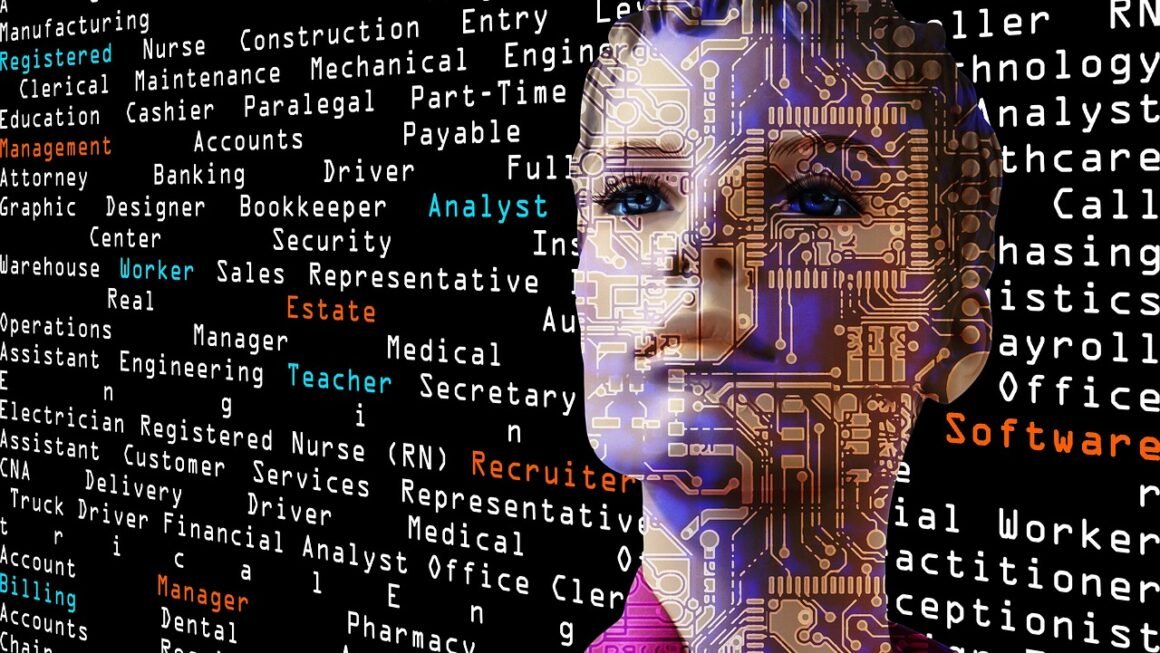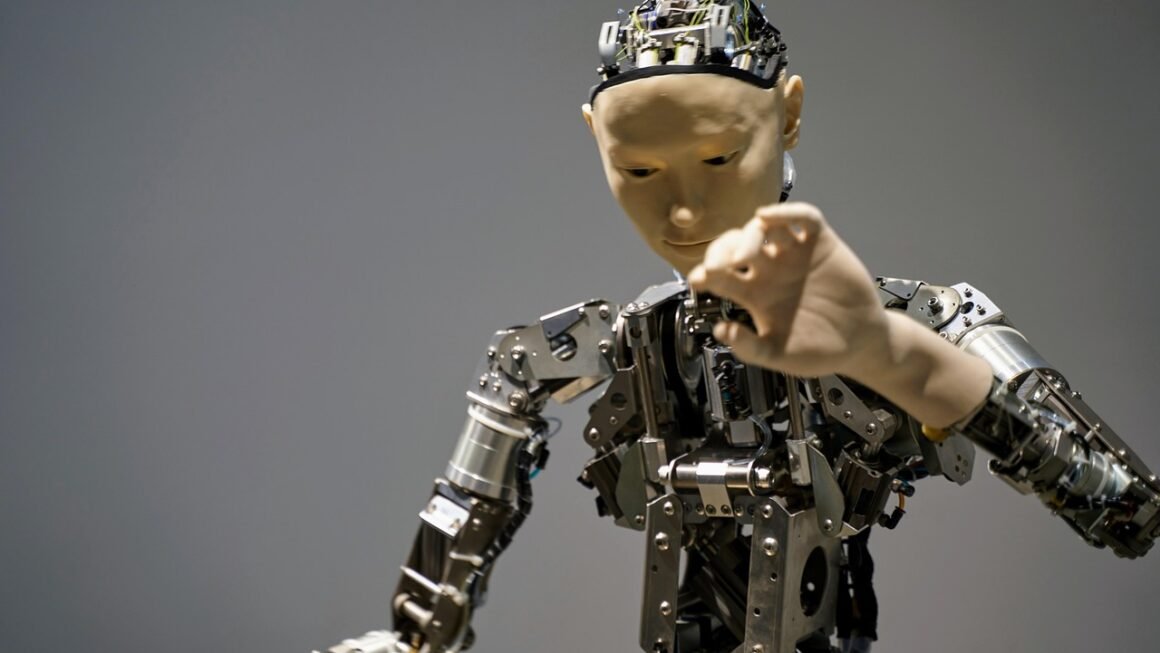
The landscape of artificial intelligence is evolving at an unprecedented pace, ushering in an era where machines don’t just process information but actively create it. For years, AI was primarily associated with tasks like data analysis, prediction, and automation. However, a revolutionary subset known as generative AI has emerged, fundamentally changing how we interact with technology and sparking a new wave of innovation across virtually every industry. From generating compelling marketing copy and realistic images to composing music and designing complex proteins, generative AI is moving beyond analytical capabilities to unlock immense creative potential, redefining the boundaries of what’s possible and opening doors to a future we’ve only just begun to imagine.
What is Generative AI?
Generative AI represents a sophisticated branch of artificial intelligence focused on producing novel, original content rather than simply analyzing existing data. Unlike discriminative AI, which learns to classify or predict outcomes based on input data (e.g., distinguishing a cat from a dog), generative AI learns the underlying patterns and structures of its training data to generate entirely new outputs that resemble the original but are not identical copies.
Defining Generative AI
At its core, generative AI involves models that can take an input (like a text prompt, an image, or a piece of audio) and generate a new output in a desired format. These models grasp the essence of the data they’ve been trained on, allowing them to extrapolate and produce variations or entirely new creations. It’s akin to an artist who, after studying countless masterpieces, can then create their own unique works.
Key Characteristics
- Original Content Creation: Generative AI excels at producing novel text, images, audio, video, code, and even 3D models.
- Learning Data Distributions: It doesn’t just memorize data; it learns the statistical distribution and underlying features of the training set.
- Versatility: These models can be applied to a wide array of tasks, from artistic endeavors to scientific research.
- Prompt-Driven: Users typically interact with generative AI by providing specific prompts or parameters, guiding the AI’s creation process.
Actionable Takeaway: Understand that generative AI is about creation, not just analysis. Think about areas in your work where new ideas, content, or designs are constantly needed – these are prime candidates for generative AI application.
The Core Mechanics: How Generative AI Works
The magic behind generative AI lies in its sophisticated architectural designs and the immense datasets they are trained on. These models leverage deep learning techniques to understand complex patterns, allowing them to then generate new data points that reflect these learned distributions.
Underlying Technologies
Generative AI models are primarily built upon neural networks, particularly deep neural networks. These networks are structured in layers, enabling them to learn hierarchical representations of data. The process involves training the model on vast amounts of data, where it adjusts its internal parameters to minimize the difference between its generated output and real-world examples.
- Large Language Models (LLMs): A common type of generative AI, LLMs are trained on massive text datasets (books, articles, websites) to understand and generate human-like text. Models like GPT-3, GPT-4, and LLaMA are prime examples.
- Deep Learning: This subset of machine learning uses multi-layered neural networks to extract high-level features from data, crucial for generating complex outputs.
- Transformers: A neural network architecture that revolutionized sequence-to-sequence tasks, particularly in natural language processing (NLP), enabling LLMs to understand context over long text passages.
Common Generative Models
Several distinct architectures drive generative AI, each with its strengths and typical applications:
- Generative Adversarial Networks (GANs): Comprising two neural networks—a “generator” that creates content and a “discriminator” that judges its authenticity—GANs engage in a continuous game of cat and mouse, iteratively improving the generator’s ability to produce realistic outputs.
- Practical Example: Generating highly realistic fake faces, photorealistic images from sketches, or synthesizing new drug molecules.
- Variational Autoencoders (VAEs): These models learn a compressed “latent space” representation of the input data and can then decode new data points from this space. VAEs are excellent for generating diverse, smooth variations of existing data.
- Practical Example: Image generation, anomaly detection, and creating new artistic styles.
- Transformer Models (e.g., GPT-x series): Dominant in natural language generation, these models excel at understanding context and dependencies in sequential data, enabling them to produce coherent and contextually relevant text.
- Practical Example: Writing articles, composing emails, summarizing documents, coding assistance, and creating chatbots.
- Diffusion Models: A more recent advancement, diffusion models work by systematically adding noise to training data and then learning to reverse that process to generate new, high-quality data. They are particularly effective for image and audio generation.
- Practical Example: State-of-the-art image generation (e.g., DALL-E 2, Midjourney, Stable Diffusion) and text-to-image synthesis.
Actionable Takeaway: Recognizing the different types of generative models helps you understand their specific strengths. If you need text, look to Transformers; for images, GANs or Diffusion Models are key. Research the specific models (like GPT, DALL-E, Midjourney) for tasks relevant to you.
Transformative Applications Across Industries
Generative AI is not just a technological marvel; it’s a practical tool revolutionizing how businesses operate, how content is created, and how problems are solved across a multitude of sectors. Its ability to produce bespoke, high-quality outputs quickly makes it invaluable.
Content Creation and Marketing
The content creation pipeline is being dramatically accelerated and enhanced by generative AI.
- Text Generation: AI can draft marketing copy, blog posts, social media updates, product descriptions, email campaigns, and even entire screenplays. This significantly reduces the time and effort for content teams.
- Practical Example: A marketing team uses an LLM to generate five different ad variations for a new product in minutes, then tests which performs best.
- Image and Video Production: Generate unique images, illustrations, logos, or even short video clips from text prompts. This empowers designers and marketers to visualize concepts faster and create diverse visual assets without extensive manual labor.
- Practical Example: An e-commerce brand creates hundreds of unique product images with various backgrounds and lighting conditions for different seasonal campaigns using text-to-image AI.
- Music and Audio: Compose original musical pieces, generate voiceovers, or create sound effects, offering new avenues for artists, game developers, and advertisers.
Product Design and Development
Generative AI is streamlining design processes and fostering innovation in product development.
- Rapid Prototyping: Generate multiple design iterations for physical products or user interfaces based on given parameters, allowing engineers and designers to explore more options faster.
- Practical Example: An automotive company uses AI to design thousands of lightweight, yet structurally sound, components for a car chassis, optimizing for both performance and material cost.
- Code Generation: Assist developers by writing code snippets, completing functions, debugging, or translating code between languages, boosting productivity.
- Practical Example: A software engineer uses GitHub Copilot (an AI code assistant) to auto-complete complex functions, reducing coding time by 20-30%.
- Material Discovery: Simulate and design new materials with specific properties, accelerating research and development in fields like chemistry and materials science.
Healthcare and Scientific Research
The scientific community is leveraging generative AI for complex problem-solving and discovery.
- Drug Discovery: Generate novel molecular structures that could serve as potential drug candidates, significantly shortening the drug discovery pipeline.
- Protein Folding: Predict the 3D structure of proteins, crucial for understanding diseases and developing new treatments.
- Personalized Medicine: Develop tailored treatment plans based on a patient’s genetic profile and medical history by analyzing vast datasets and generating personalized recommendations.
Education and Personalization
AI’s generative capabilities are transforming learning and user experiences.
- Customized Learning Materials: Create personalized quizzes, summaries, or educational content adapted to an individual student’s learning style and pace.
- AI Tutors: Develop intelligent tutoring systems that can answer questions, explain complex concepts, and guide students through learning paths.
- Hyper-Personalized Experiences: Generate customized recommendations, user interfaces, or interactive content that precisely matches individual user preferences and behaviors.
Actionable Takeaway: Look for opportunities to integrate generative AI where repetitive content creation, rapid prototyping, or complex data synthesis is required. Start with small experiments to understand its impact.
Unleashing Potential: Benefits and Opportunities
The widespread adoption of generative AI is driven by a compelling suite of benefits that promise to redefine productivity, creativity, and personalization across various domains.
Boosted Creativity and Innovation
Generative AI acts as a powerful co-creator, pushing the boundaries of human imagination.
- Idea Generation: Quickly produce a multitude of diverse ideas, concepts, and designs that human creators might not have considered.
- Overcoming Creative Blocks: Provide prompts and starting points to break through creative stalemates, offering fresh perspectives.
- Exploration of New Styles: Experiment with different artistic styles, voices, or formats without extensive manual effort.
Practical Example: A graphic designer, facing a creative block for a new campaign, uses Midjourney to generate hundreds of abstract concepts in minutes, finding inspiration for their final design.
Enhanced Efficiency and Automation
One of the most immediate benefits is the significant increase in operational efficiency.
- Task Automation: Automate repetitive and time-consuming content creation tasks, freeing up human resources for more strategic work.
- Statistics: Some studies suggest that AI tools can reduce content creation time by 40-60%.
- Faster Iteration: Rapidly generate multiple versions of designs, text, or code, allowing for quicker testing and refinement cycles.
- Cost Reduction: By automating tasks and speeding up processes, businesses can achieve substantial cost savings in labor and production.
Personalized Experiences
Generative AI enables an unprecedented level of customization for users and customers.
- Tailored Content: Deliver highly personalized recommendations, marketing messages, and user interfaces that resonate deeply with individual preferences.
- Adaptive Learning: Create dynamic educational content that adjusts in real-time to a student’s progress and understanding.
- Customer Service: Power sophisticated chatbots that provide natural, empathetic, and highly relevant responses to customer inquiries.
Democratization of Advanced Tools
Generative AI makes sophisticated creative and analytical tools accessible to a broader audience.
- Lower Entry Barriers: Individuals without specialized skills (e.g., coding, graphic design) can now leverage AI to create professional-quality content.
- Empowering Small Businesses: Startups and small businesses can access advanced marketing, design, and development capabilities without large investments in human capital.
Actionable Takeaway: Identify processes that are bottlenecks due to manual content generation or lack of specialized skills. Generative AI can be a force multiplier here, fostering both efficiency and creative output.
Navigating the Landscape: Challenges and Ethical Considerations
While the opportunities presented by generative AI are immense, its rapid advancement also brings forth significant challenges and critical ethical considerations that demand careful attention and proactive solutions.
Data Privacy and Security
Generative AI models are trained on colossal datasets, raising concerns about how this data is collected, stored, and used.
- Sensitive Data Exposure: The risk of inadvertently generating or revealing sensitive personal or proprietary information embedded in the training data.
- Data Breaches: Large datasets used for training are attractive targets for cyberattacks, potentially exposing vast amounts of information.
- Copyright Infringement: Questions arise regarding the originality of generated content and whether it infringes on existing copyrighted works used in the training data.
Practical Tip: Implement robust data governance frameworks, anonymization techniques, and secure data storage practices when working with generative AI. Always verify the originality and sources of AI-generated content before public use.
Bias and Fairness
AI models reflect the biases present in their training data, which can lead to unfair or discriminatory outputs.
- Reinforcement of Stereotypes: If training data is skewed (e.g., predominantly showing male doctors and female nurses), the AI may generate content that perpetuates these stereotypes.
- Discriminatory Outcomes: Biased AI could lead to unfair decisions in areas like hiring, loan applications, or even medical diagnoses.
Practical Tip: Actively audit training data for representativeness and diversity. Implement bias detection tools and human oversight in the deployment of generative AI systems, especially in sensitive applications.
Misinformation and Deepfakes
The ability to generate highly realistic text, images, and videos poses a significant threat of creating and spreading misinformation.
- Synthetic Media (Deepfakes): High-quality fake videos or audio that depict individuals saying or doing things they never did, with potential for defamation, fraud, or political manipulation.
- AI-Generated Propaganda: The rapid creation of large volumes of persuasive, yet false, content that can sway public opinion or spread harmful narratives.
Practical Tip: Develop and deploy detection mechanisms for AI-generated content. Promote media literacy and critical thinking skills among users. Support initiatives for watermarking or digital provenance of AI-generated media.
Job Displacement and Workforce Evolution
As AI automates more tasks, there are legitimate concerns about its impact on employment.
- Automation of Repetitive Tasks: Roles involving routine content creation or data entry are particularly susceptible to automation.
- Skill Gap: The demand for new skills related to AI management, ethical AI, and prompt engineering will grow, requiring significant workforce retraining.
Practical Tip: Focus on upskilling and reskilling your workforce to adapt to AI-powered environments. Emphasize uniquely human skills like critical thinking, creativity, emotional intelligence, and complex problem-solving that complement AI capabilities.
Actionable Takeaway: Don’t overlook the ethical implications. Proactively address data privacy, bias, and misinformation. Invest in responsible AI development and continuous workforce adaptation to harness generative AI’s power safely and equitably.
The Road Ahead: The Future of Generative AI
Generative AI is still in its nascent stages, yet its trajectory suggests a future brimming with even more sophisticated capabilities and deeper integration into our daily lives. The ongoing research and development promise to push the boundaries of what these models can achieve.
Advancements in Multimodality
The current generation of generative AI often specializes in one type of data (text, image, audio). The future will see increasingly sophisticated multimodal models that can seamlessly understand and generate content across different modalities.
- Cross-Modal Generation: Imagine an AI that can take a text description, generate an accompanying image, narrate it with an appropriate voice, and then animate the scene into a video.
- Integrated AI Assistants: More comprehensive AI assistants that can respond to complex queries involving text, images, and audio, generating cohesive and contextually rich answers.
Greater Accessibility and Integration
As generative AI becomes more robust and efficient, its tools will become even more accessible and seamlessly integrated into existing platforms and workflows.
- Embedded AI: Generative AI features will be built directly into common software applications (e.g., word processors, design software, coding environments), becoming an invisible layer of assistance.
- User-Friendly Interfaces: Interfaces will become even more intuitive, allowing a wider range of users to leverage powerful AI capabilities without technical expertise.
- Open-Source Advancements: The growth of open-source generative AI models will foster innovation and customization at a faster pace.
Focus on Responsible AI Development
The challenges identified earlier will drive a stronger emphasis on developing AI responsibly and ethically.
- Robust Regulatory Frameworks: Governments and international bodies will establish clearer guidelines and regulations for the development and deployment of generative AI.
- Transparency and Explainability: Increased efforts to make AI models more transparent, allowing users to understand how outputs are generated and detect potential biases.
- Safety and Alignment: Prioritizing research into AI safety, ensuring models are aligned with human values and intentions, and preventing harmful or unintended consequences.
Actionable Takeaway: Stay informed about regulatory changes and best practices in responsible AI. Begin experimenting with available tools and integrate them thoughtfully into your strategies, keeping an eye on the evolving landscape of multimodal AI.
Conclusion
Generative AI stands as a monumental leap in artificial intelligence, transitioning from an era of data analysis to one of boundless creation. We’ve explored its core definition, the sophisticated mechanisms that power it, and its transformative applications spanning content creation, product design, healthcare, and education. The benefits are clear: unprecedented boosts in creativity, efficiency, personalization, and the democratization of advanced tools. However, this power comes with a responsibility to navigate critical challenges related to data privacy, bias, misinformation, and job displacement.
The future of generative AI promises even more advanced multimodal capabilities, seamless integration into our daily lives, and a crucial emphasis on responsible development. By understanding its potential, addressing its challenges head-on, and investing in ethical deployment, we can harness generative AI to solve complex problems, unlock new frontiers of creativity, and build a future that is both innovative and equitable. Embracing this technology with informed caution and strategic vision will be key to unlocking its full, transformative power for society.